You’re not painting it. You’re not staining it every few years. You’re not replacing rotted boards or dealing with termite damage.
Vinyl fencing in Howey-in-the-Hills, FL means you install it once and forget about it. The material flexes during storm winds instead of snapping like wood. It doesn’t fade under that relentless Central Florida sun. And when you hose it off once or twice a year, it looks new again.
That’s the difference between a fence that becomes a project and one that just works. Most residential vinyl fences last 20 to 30 years without major repairs. No rust like chain link. No splinters like wood. Just a clean perimeter that holds up while you focus on everything else your property needs.
If you’re in an HOA, vinyl usually checks the boxes without the back-and-forth. If you’re near the lake or dealing with humidity, vinyl won’t warp or rot. And if you’re tired of contractors who don’t show up or don’t finish the job right, working with a licensed and insured fence contractor in Howey-in-the-Hills, FL means the install gets done correctly the first time.
We’ve been serving Central Florida for over two decades. We’re licensed, bonded, and insured, which matters more than most people realize until something goes wrong.
Howey-in-the-Hills sits in Lake County, where properties face extreme wind risk and serious heat. You need fencing that’s engineered for this climate, and you need installers who understand local building codes and HOA requirements. We’ve done hundreds of residential vinyl fence installations across nine counties, and we know what holds up here.
You’ll find us in Orlando Magazine’s 2025 Home Design Awards and across 175+ Google reviews. We don’t subcontract the work. We don’t disappear after the deposit. We show up, install it right, and make sure you’re happy with it before we’re done.

First, we come out to your property in Howey-in-the-Hills, FL and walk the perimeter with you. We’ll talk about what you’re trying to accomplish—privacy, security, curb appeal, pool code compliance—and measure everything so the quote is accurate.
Once you approve the estimate, we handle the permits. That’s one less thing you need to track down, and it keeps the project moving without delays.
Installation day, we mark utilities, set the posts in concrete, and install the vinyl fence panels. Everything gets leveled and secured to handle wind load. We’re not rushing it. The posts need to cure properly, and the rails need to lock in without gaps.
After the install, we walk the fence line with you. You’ll see how the gates swing, how the panels align, and how the whole thing looks from the street. If something’s off, we fix it before we leave. That’s the part a lot of vinyl fence contractors skip, and it’s why callbacks happen.
You’re left with a fence that’s going to be there in 20 years, looking almost identical to the day we installed it.

Ready to get started?
You’re getting professional-grade vinyl materials—posts, rails, panels, and caps—that resist UV fading and won’t crack under pressure. These aren’t the big-box store kits. The vinyl is thicker, the color goes all the way through, and the hardware is built to last in Florida’s humidity.
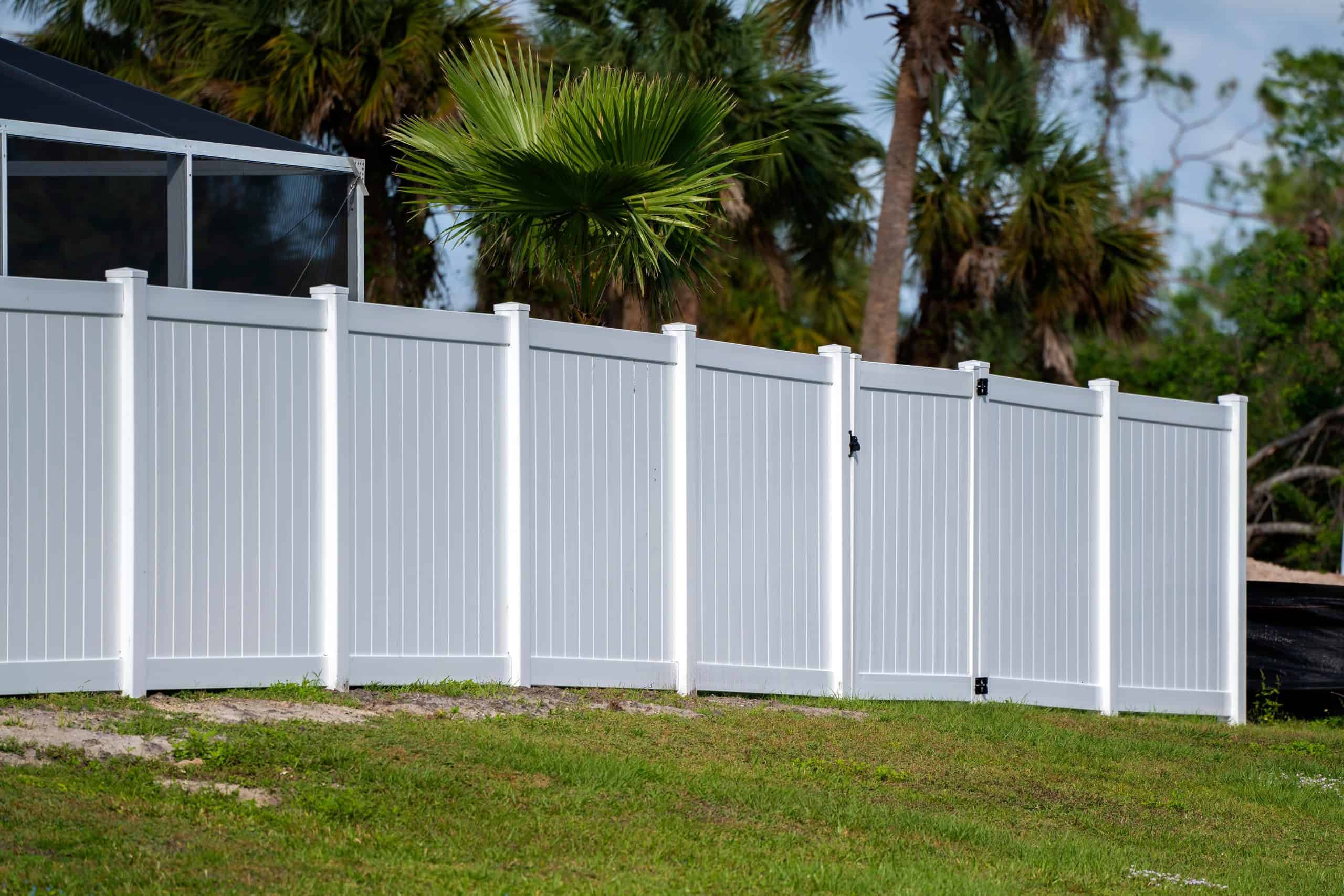
We install privacy fences, picket fences, semi-privacy styles, and pool enclosures. Heights vary depending on what you need and what’s allowed in your neighborhood. Most Howey-in-the-Hills properties have HOA guidelines, and we’ll make sure your vinyl fence installation meets those requirements without you having to play referee.
The install includes concrete footings for every post. That’s non-negotiable in a place where wind speeds during storms can wreck a poorly anchored fence. We also include gates where you need them—single or double swing, with stainless steel hinges and latches that won’t corrode.
If you’ve got uneven terrain or tricky corners, we adjust for that. Vinyl fencing can be stepped or racked depending on the slope, and we’ll walk you through what makes sense for your property. The goal is a fence that looks intentional, not like it was forced into place.

Most vinyl fence installations in Central Florida run between $15 and $40 per linear foot, depending on the style, height, and site conditions. If you’re installing a privacy fence with thicker panels and taller posts, expect to be closer to the higher end. A simple picket fence will cost less.
Labor typically adds $5 to $10 per linear foot, and materials make up the rest. If your property has rocky soil, steep grades, or requires extra posts for wind bracing, that can increase the cost. We give you a transparent estimate upfront so there’s no confusion later.
For a typical backyard in Howey-in-the-Hills—say, 150 linear feet of six-foot privacy fencing—you’re looking at somewhere between $2,250 and $6,000 depending on the specifics. That includes materials, labor, permits, and cleanup. Compare that to wood, which might be cheaper initially but will cost you hundreds every few years in maintenance, and vinyl starts to make a lot more sense.
A properly installed vinyl fence in Howey-in-the-Hills, FL will last 20 to 30 years without major issues. The material doesn’t rot, warp, or attract pests like wood does. It won’t rust like metal. And because the color is part of the vinyl itself, not a coating, it doesn’t chip or peel.
Florida’s heat and UV exposure are tough on fencing, but quality vinyl is engineered to resist fading. You might notice minor discoloration after a decade or so, but it’s not the kind of breakdown you see with wood or painted metal. The fence stays structurally sound.
Hurricanes are the bigger test. Vinyl has flexibility, so it bends under wind pressure instead of snapping. That said, if debris hits it hard enough, panels can crack. But compared to wood fences that blow apart or metal fences that bend permanently, vinyl holds up better. And if a panel does get damaged, you can replace just that section without tearing down the whole fence.
Yes, most fence installations in Lake County require a permit, especially if the fence is over a certain height or near a property line. The rules vary depending on whether you’re in city limits, part of an HOA, or on a larger lot outside town.
We handle the permit process as part of the installation. That includes submitting the site plan, making sure the fence meets setback requirements, and coordinating inspections if needed. It’s one less thing you have to figure out, and it keeps the project on schedule.
If you’re in an HOA, there’s usually an approval process on top of the county permit. Some HOAs have restrictions on fence color, height, or style. We’ve worked with most of the communities around Howey-in-the-Hills, so we know what flies and what doesn’t. Getting that approval upfront saves you from having to redo work later.
Almost none. You hose it off once or twice a year to remove pollen, dirt, and mildew. If you’ve got stubborn stains, a bucket of soapy water and a soft brush will handle it. That’s the extent of vinyl fence maintenance.
You’re not sealing it. You’re not repainting it. You’re not replacing boards that rotted out or sanding down splinters. Wood fences need attention every two to three years just to stay functional. Metal fences rust and need repainting. Vinyl just sits there and does its job.
The hardware—hinges, latches, gate handles—might need a little attention over the years. A drop of lubricant keeps things moving smoothly. But compared to the ongoing cost and effort of maintaining a wood fence in Florida’s humidity, vinyl is a completely different experience. It’s one of the main reasons people switch.
Vinyl fencing is more flexible than wood or metal, which helps during high winds. Instead of snapping or bending permanently, vinyl panels flex and then return to shape once the wind dies down. That flexibility is a big advantage in Central Florida, where storm season is a real consideration.
That said, no fence is indestructible. If a tree branch or patio furniture slams into your vinyl fence during a hurricane, it can crack or dislodge panels. But the damage is usually localized. You replace the affected section, not the entire fence.
Proper installation matters more than most people realize. If the posts aren’t set deep enough or the concrete footings aren’t adequate, even the best vinyl won’t hold up. We install every post with wind load in mind, using concrete footings and proper bracing. That’s how vinyl fences in Howey-in-the-Hills, FL survive storms that take out cheaper installations.
Vinyl costs more upfront than wood, but it’s cheaper over time. Wood fences need staining or sealing every few years, and in Florida’s climate, you’re also dealing with rot, termites, and warping. Those repairs add up fast. Vinyl eliminates all of that.
Aluminum is low-maintenance like vinyl, but it doesn’t offer the same privacy. Aluminum fences are usually open picket or rail styles, which work great for front yards but don’t give you the seclusion most people want in a backyard. Vinyl privacy fences block sightlines completely, and they dampen noise better than metal.
If you’re comparing purely on durability, vinyl and aluminum are both solid choices. But vinyl gives you more design flexibility, better privacy, and a cleaner look that fits most HOA requirements in Howey-in-the-Hills. It’s the reason vinyl fence installation has become the most popular option for residential properties in Central Florida.
Other Services we provide in Howey-In-The-Hills