You’re looking at a fence that doesn’t fade after two summers or lean after the first storm. Vinyl fencing in Marion County makes sense because the material doesn’t absorb moisture, so it won’t warp in the humidity or rot from constant rainfall. It won’t splinter, crack, or attract termites the way wood does.
Most vinyl fences last 20 to 30 years with almost no maintenance. You rinse it a few times a year with a garden hose and you’re done. No sanding, no staining, no repainting every few years.
The upfront cost runs higher than wood—typically $20 to $35 per linear foot in Marion County—but you’re not spending money on repairs or refinishing down the line. That’s where the value shows up. You install it once, and it works for decades without asking for much in return.
We serve Marion County and the surrounding Central Florida area with residential and commercial fence installation. We’re licensed, bonded, and insured in Florida, which matters more than you’d think when you’re comparing contractors.
We use quality materials and install them correctly the first time. That means concrete footers for every post—mandatory in Marion County’s sandy soil if you want your fence to stay upright through storm season. We’ve done this long enough to know what holds up and what doesn’t.
Our pricing is transparent. No hidden fees, no surprises after the job starts. We show up when we say we will, finish the work efficiently, and make sure you understand what you’re getting before anything gets installed.

First, we come out to your property and take measurements. We talk through what you need—privacy, security, decorative picket, pool barrier—and go over style options, height, and gate placements. You’ll get a written estimate that breaks down material and labor costs with no guesswork.
Once you approve the quote, we handle any required permits. In Marion County, you typically don’t need a permit for fences under six feet, but pool fences require compliance with Florida Building Code safety standards. We make sure everything is filed correctly so there are no delays or code violations.
Installation starts with marking property lines and setting posts in concrete footers. This step matters more than most people realize—it’s what keeps your fence standing through wind and weather. After posts cure, we install rails and panels, check for level and alignment, then add gates with self-closing hardware if needed. The whole process usually wraps up in a few days depending on the size of your property.

Ready to get started?
A standard 150-foot vinyl fence installation in Marion County typically costs between $3,000 and $5,250. That includes materials, labor, concrete footers, and professional installation. The price shifts based on fence height, style, and whether you need gates or custom configurations.
You’re getting PVC material engineered to resist UV damage from Florida sun and flexible enough to handle wind gusts over 50 mph. The fence won’t rust, corrode, or need treatment for pests. It’s non-porous, so moisture doesn’t get absorbed and cause the kind of damage you see with wood.
We install every post with a concrete footer because Marion County’s sandy soil won’t hold a fence upright otherwise. Gates get heavy-duty hinges and self-closing mechanisms if required by code. You also get a fence that increases your property value—most homeowners see a return of 30% to 70% of the installation cost when they sell.
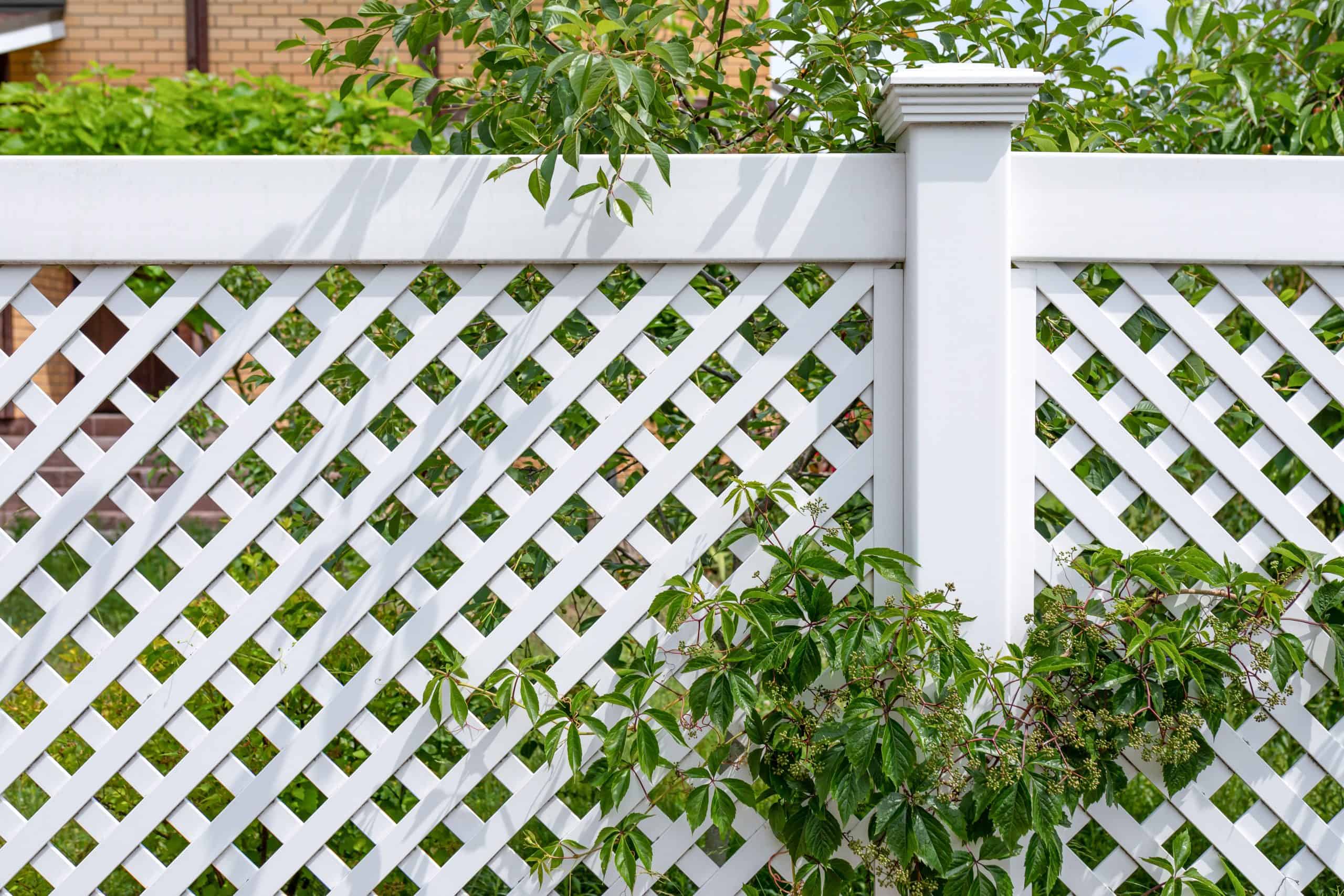
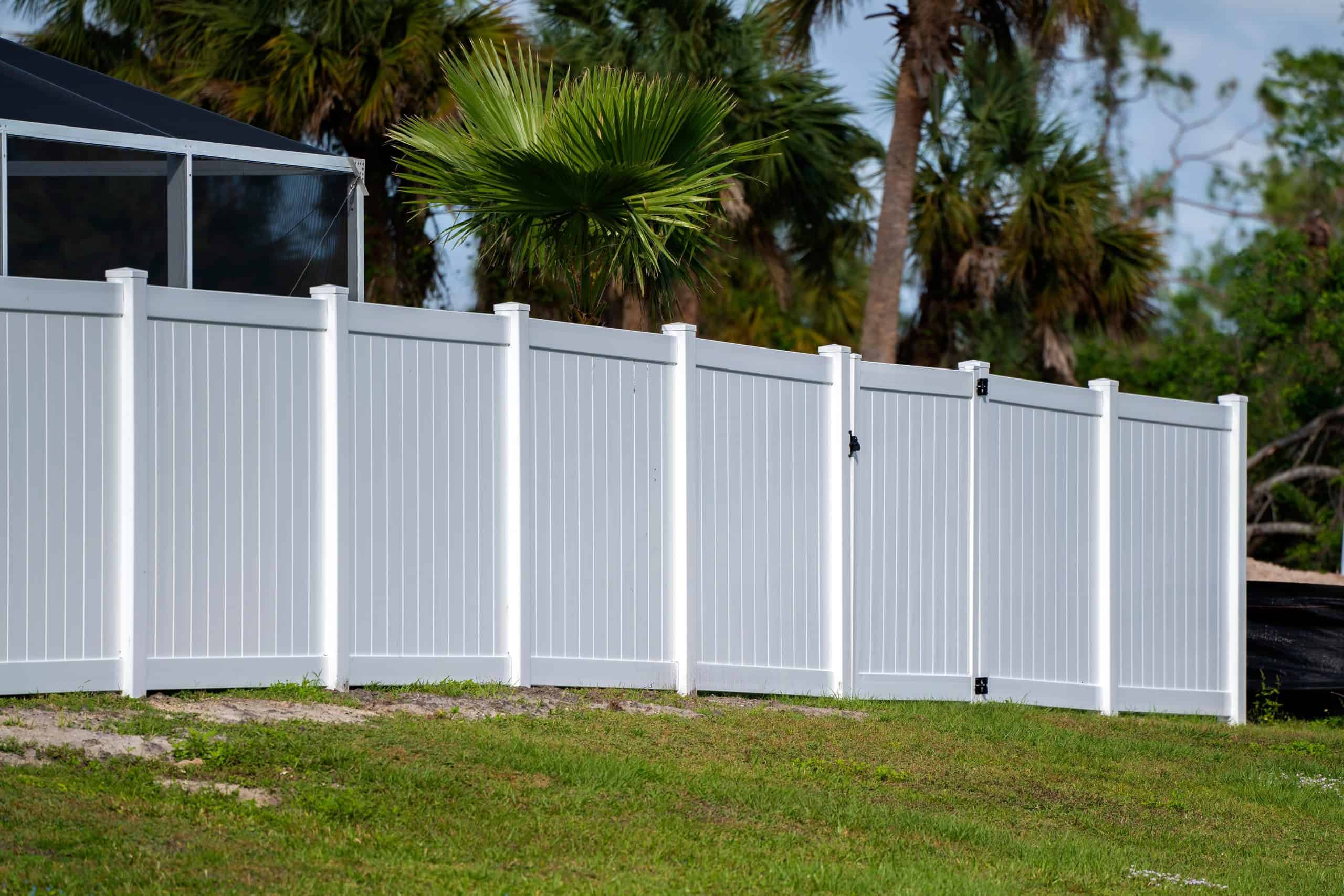
Vinyl fences come in multiple styles: privacy panels for full coverage, picket designs for curb appeal, or semi-privacy if you want airflow with some screening. You can choose from different colors and heights to match your property. The material mimics wood grain or keeps a clean, modern look depending on what fits your home.

Vinyl fences typically last 20 to 30 years in Marion County with minimal maintenance. The material is built to handle Florida’s humidity, heat, and storms without breaking down the way wood or metal does.
Because vinyl doesn’t absorb moisture, it won’t warp, rot, or swell from rainfall or high humidity. It also resists UV damage, so it won’t fade or become brittle even with constant sun exposure. That’s a significant advantage in Central Florida where other materials degrade quickly.
You’re not dealing with rust, corrosion, termites, or wood rot. The fence holds its shape and color for decades. Most of the time, all you need to do is rinse it with a hose a few times a year to keep it looking clean.
In Marion County, you generally don’t need a permit for fences under six feet tall. If your fence exceeds six feet or you’re installing a pool barrier, a permit is required.
Pool fences have specific code requirements under Florida Building Code. They need to be at least four feet high with self-closing, self-latching gates that open outward. The latch must be positioned high enough that small children can’t reach it. These rules exist to prevent accidental drownings, and they’re enforced.
We handle permit applications and make sure your fence meets all local and state regulations. That includes proper setbacks from property lines, height restrictions, and safety features for pool enclosures. It’s easier to do it right the first time than deal with code violations or fines later.
Vinyl costs more upfront—usually $20 to $35 per linear foot in Marion County compared to $10 to $20 for wood. But wood requires staining or sealing every two to three years, and it’s more likely to need repairs or replacement within 10 to 15 years.
When you factor in maintenance costs, vinyl becomes the better value over time. You’re not paying for stain, sealant, or labor to refinish the fence every few years. You’re also not replacing rotted boards or dealing with termite damage, which is common with wood fences in Florida.
A 150-foot vinyl fence installation typically runs $3,000 to $5,250 in Marion County. That’s a one-time cost for a fence that lasts decades. Wood might save you money initially, but the ongoing upkeep adds up fast, and you’ll likely replace it sooner.
Vinyl fences are designed to handle high winds better than most people expect. A properly installed vinyl picket fence can withstand wind gusts over 50 mph, and privacy panels hold up well when installed with the right post spacing and concrete footers.
The key is professional installation. Posts need to be set deep in concrete footers—not just driven into the ground. In Marion County’s sandy soil, concrete is the only way to keep posts from shifting or leaning during storms. We space posts correctly and use reinforced rails to distribute wind load across the fence structure.
Vinyl has some flex to it, which actually helps during high winds. It bends slightly under pressure instead of snapping like rigid materials. That flexibility, combined with solid post anchoring, is what keeps the fence standing when storms roll through Central Florida.
Vinyl fences need almost no maintenance. You rinse them with a garden hose a few times a year to remove dirt, pollen, or mildew. That’s about it.
You don’t need to paint, stain, seal, or treat the material. It won’t rot, so there are no boards to replace. It won’t rust, so you’re not dealing with corrosion or flaking. Termites and other pests don’t damage vinyl the way they destroy wood.
If you get scuff marks or stubborn stains, a mild soap and water solution usually takes care of it. The fence won’t fade from sun exposure or lose its color over time. It’s designed to look the same in year 20 as it did the day it was installed, with very little effort on your part.
Vinyl and aluminum both handle Florida’s climate well, but they serve different purposes. Vinyl offers complete privacy and comes in solid panel designs that block sightlines entirely. Aluminum is an open style—decorative and secure, but not private.
Aluminum fences work well for pool enclosures, front yard borders, or commercial properties where you want visibility with a clean, finished look. Vinyl makes more sense for backyards, side yards, or anywhere you want full privacy and noise reduction.
Both materials resist rust, rot, and pests. Both require minimal maintenance. The choice usually comes down to whether you need privacy or prefer an open design. We install both types and can walk you through which option fits your property and budget better.