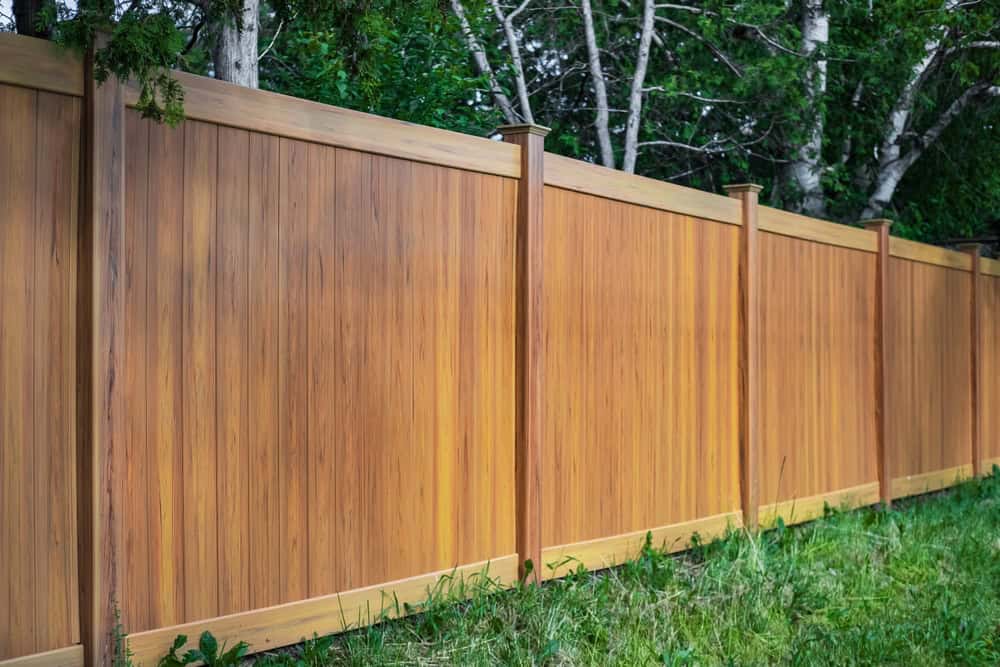
Envision your property with a wooden fence that weaves elegance and resilience. We craft captivating wood fences in Sanford, transforming properties instantly.


Wood Fences in Sanford via Mossy Oak Fence LLC
Locally Serving Seminole County
At Mossy Oak Fence LLC, our artisans in Sanford, FL, blend time-honored techniques with modern artistry, using rich cedar, resilient redwood, and classic pine to create fences that stand tall against the passage of time. Deeply connected to Seminole County, we believe in building more than just structures; we build relationships, trust, and fences that tell your story.

Your FL Fence Odyssey
Ready to get started?
Mossy Oak Fence LLC; Your Seminole County Partner
Wood fences are emblems of warmth, security, and timeless beauty. At Mossy Oak Fence LLC, we understand the profound impact a well-crafted fence can have on your property. We’re masters of our craft, specializing in a diverse array of styles and designs to complement your unique vision. Ready to embark on your fence journey? Contact us at 352-706-3131, and let’s build something extraordinary together.

The Mayaca or Jororo Indians inhabited the shores of Lake Monroe at the time of European contact. By 1760, however, war and disease had decimated the tribe, which would be replaced by the Seminole Indians. Florida was acquired by the United States from Spain in 1821, but the Seminole Wars would delay settlement. In 1835, the Seminoles burned the port of Palatka on the St. Johns River, then the major artery into Central Florida from the East Coast. Consequently, an army garrison was established upstream, on the southern side of Lake Monroe near a trading post. Called Camp Monroe, the log breastwork was attacked on February 8, 1837. It would be strengthened and renamed Fort Mellon in honor of Captain Charles Mellon, the sole American casualty.
Lake Monroe, circa 1912General Zachary Taylor had a road built connecting a string of defenses from Lake Monroe to Fort Brooke (now Tampa). The town of Mellonville was founded around Fort Mellon in 1842 by Daniel Stewart. In 1845, Florida became a U.S. state, and Mellonville became county seat of Orange County, formerly called Mosquito County with its county seat across the lake at Enterprise. Orange groves were planted, with the first fruit packing plant built in 1869. In 1870, “General” Henry Shelton Sanford bought 12,548 acres (50.78 km2) to the west of Mellonville and laid out the community of Sanford. Believing it would become a transportation hub, he called it “The Gateway City to South Florida.”
Several groups of Swedes were imported as indentured servants to do the back-breaking labor of establishing a new town and clearing the sub-tropical wilderness in advance of creating a citrus empire, arriving by steamboat in 1871. Incorporated in 1877 with a population of 100, Sanford absorbed Mellonville in 1883. The South Florida Railroad ran a line from Sanford to Tampa, later the Jacksonville, Tampa and Key West Railroad ran a line to Jacksonville, and the area became the largest shipper of oranges in the world. Arriving by steamer in April 1883, President Chester A. Arthur vacationed a week at the Sanford House, a lakeside hotel built in 1875 and expanded in 1882.
Learn more about Sanford.Local Resources