Summary:
You noticed something off with your fence — a leaning post, a few rotted boards, maybe a whole section that didn’t survive the last storm. Now you’re trying to figure out whether this is a quick fix, a full replacement, or something in between. That’s a harder question than it sounds, especially here in Central Florida, where the climate puts fences through more stress than most homeowners expect. This guide will help you read the signs clearly, understand what’s actually happening structurally, and make a decision you won’t second-guess later.
How to Tell If Your Fence Needs Repair or Full Replacement
The honest answer is that it depends on where the damage is, not just how bad it looks. A fence with three rotted pickets and solid posts is a repair. A fence with two rotted pickets and posts that are crumbling underground is a replacement — even if it looks mostly fine from the street.
The general industry threshold is this: if more than 20 to 30 percent of your fence components are damaged or compromised, replacement is usually the smarter financial move. And when estimated repair costs climb past 50 percent of what a new fence would cost, the math almost always favors starting fresh. We’ll tell you this upfront when we assess your fence.
What Rotting Fence Posts Actually Mean for Your Fence
Post rot is the most misunderstood fence problem in Central Florida. Homeowners see soft or discolored wood on the surface and assume it’s cosmetic. But the real damage is almost always underground, where the post meets the soil — and that’s the part you can’t see without digging.
Central Florida’s sandy soil holds moisture differently than the clay-heavy ground you’d find in other parts of the country. Water drains quickly on the surface, but it also saturates the soil around fence posts during heavy rain, then sits there while the sun bakes the top layer dry. That cycle — wet, dry, wet, dry — accelerates rot at the soil line faster than almost anything else. Add in the region’s year-round humidity and you have conditions that can hollow out a pressure-treated post years ahead of schedule.
The above-ground symptoms of underground rot are wobbling, leaning, or panels that seem to pull away from the post even when the fasteners look intact. If you push on a post and feel movement at the base, that post has likely lost most of its structural integrity below grade. Straightening it without replacing it is a temporary fix at best — one good afternoon thunderstorm and it’s back where it started, or worse.
Here’s the part that catches a lot of homeowners off guard: termites. Central Florida has a significant subterranean termite population, and they can hollow out a wood fence post from the inside without leaving any visible surface evidence. The post looks fine. It sounds hollow when you knock on it. And it fails completely the next time a storm puts lateral force on it. If your fence is wood and it’s been in the ground for more than seven or eight years in this climate, a professional inspection of the posts — not just the boards — is worth doing before you commit to a repair.
Storm Damage to Fences in Central Florida: Repair vs. Replace After a Major Weather Event
Central Florida gets hit from two directions during storm season. There are the named storms — Irma in 2017, Ian in 2022 — that cause obvious, widespread damage across Lake, Orange, Osceola, and Seminole counties all at once. And then there are the daily afternoon thunderstorms that roll through from May through September, sometimes producing downburst winds that exceed 80 to 100 mph without ever making the news. Both can destroy a fence. The difference is that the slow-building damage from repeated summer storms is easier to ignore until it isn’t.
When a storm knocks down part of your fence, the first question isn’t cosmetic — it’s structural. If the posts are still plumb, still solid at the base, and the damage is limited to panels or pickets, repair is often entirely sufficient. A 60 mph wind gust hitting a 100-foot solid privacy fence generates over 9,000 pounds of lateral force on the posts. If your posts held through that, they’re worth keeping. If they didn’t, no amount of panel replacement will fix the underlying problem.
The trickier situation is when a storm reveals damage that was already there. A fence that’s been slowly rotting at the post bases for two or three years might look fine right up until a storm pushes it past its last margin of structural integrity. At that point, the storm didn’t really cause the failure — it just made it visible. Repairing that fence means addressing the posts, not just the panels, and in many cases the honest recommendation is full replacement.
One thing worth knowing: standard homeowners insurance may cover sudden storm damage — a tree falling on your fence, for example — but it generally does not cover damage from rot, lack of maintenance, or gradual deterioration. If you’re filing a claim after a storm, the insurance adjuster will look at whether the damage was caused by the storm or whether the storm simply accelerated an existing condition. Keeping up with annual fence maintenance and inspections gives you a much stronger position if that conversation ever happens.
Fence Repair by Material Type: What Holds Up in Central Florida's Climate
Not all fence materials fail the same way, and the right repair or replacement decision depends heavily on what your fence is made of. Wood, vinyl, aluminum, and chain link each have different failure patterns — and different lifespans in Central Florida’s specific climate conditions.
The humidity, UV exposure, and storm season here are harder on fences than most national averages account for. A wood fence that might last 20 years in a northern climate often lasts 10 to 15 years in Central Florida with good maintenance — and as few as 5 to 10 with poor maintenance. That context matters when you’re deciding whether to repair or replace.

Wood Fence Damage Signs That Go Beyond Surface Rot
Wood is the most common residential fence material in Central Florida, and it’s also the most maintenance-dependent. Sealed annually and properly installed with pressure-treated posts, a wood fence can hold up well in this climate. Left unmaintained, it deteriorates faster than most homeowners expect.
Surface rot on pickets and rails is a repair. Soft, crumbling bottom rails that run the length of a fence section are a replacement signal — because if the rail is gone, every board attached to it is already compromised. The rule of thumb is straightforward: if the damage is isolated to a few components and the posts are solid, repair makes sense. If the rot has spread to the structural elements, you’re not repairing a fence anymore, you’re replacing it one piece at a time until you’ve spent more than a new fence would have cost.
Wood fence damage from UV exposure shows up as graying, cracking, and splitting — especially on boards that face south or west and take the most direct sun. This is mostly cosmetic early on, but untreated cracks let moisture in, which accelerates rot from the inside. Annual sealing is the cheapest maintenance investment a wood fence owner can make. If you’re looking at a fence where the wood has never been sealed and is deeply cracked and grayed throughout, the cost to restore it often approaches the cost of replacement.
One material advantage worth knowing: we source our wood from a large-volume Florida mill that doesn’t sell to the general public. The boards are wider and thicker than what most contractors use, which means they hold up longer in this climate. When you’re comparing quotes, it’s worth asking what dimensions the lumber actually is — because not all wood fences are built the same.
Vinyl and Aluminum Fence Repair: When Damage Means It's Time to Replace
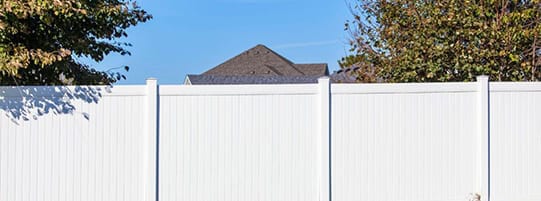
Vinyl fences are often sold as low-maintenance, and in many ways they are. But “low-maintenance” doesn’t mean indestructible. Central Florida’s UV intensity breaks down vinyl over time, causing discoloration and brittleness. Vinyl can also crack from impact — hail, falling branches, or debris during a storm. A single cracked panel is a repair. Multiple cracked panels combined with posts that are sagging or bowing even slightly point toward replacement, because the structural integrity of the system is compromised.
One thing to check on a vinyl fence that’s been standing for several years: the internal reinforcement inside the posts. Vinyl posts are hollow and typically reinforced with a metal or composite insert. If the post is visibly bowing or leaning, the reinforcement has likely failed, and no surface repair will fix that. The post needs to come out.
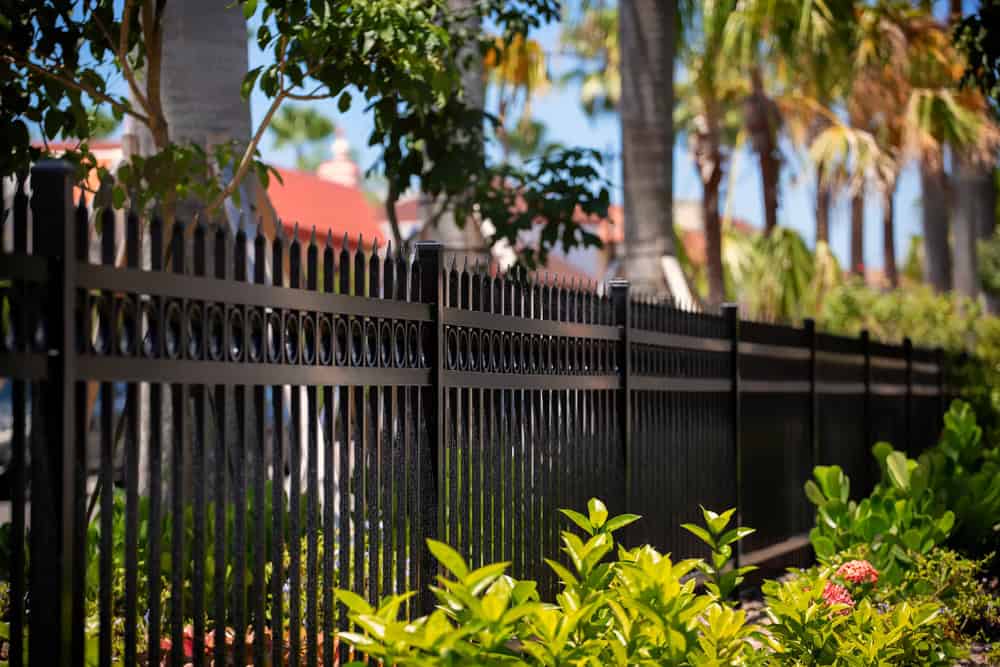
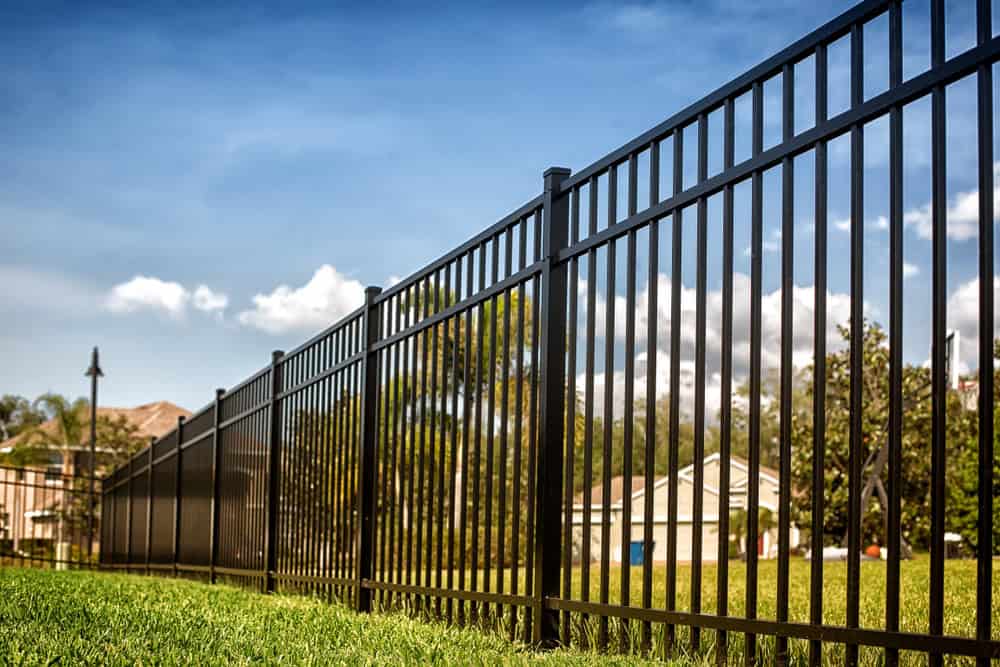
Aluminum fences are generally the most durable option in Central Florida’s climate. They don’t rot, they resist corrosion better than most metals, and they can last 20 to 50 years with minimal maintenance. When aluminum fences fail, it’s usually from storm impact — bent sections, broken welds, or fastener corrosion near the coast in Brevard or Volusia counties where salt air accelerates oxidation. Individual bent sections can sometimes be straightened or replaced without touching the rest of the fence, which makes aluminum one of the more repair-friendly materials available.
The practical question for any fence type is the same: is the damage isolated, or has it spread to the structural components? Panels, pickets, and rails are replaceable parts. Posts and footings are the foundation. When the foundation is compromised, repair becomes a way of spending money on a fence that’s already failing.
When to Call a Fence Contractor in Central Florida for an Honest Assessment
Most fence problems don’t announce themselves clearly. They show up as a gate that stopped latching right, a post that wobbles when you push it, or a section that leaned a few degrees after the last storm. Those symptoms are worth taking seriously, because what’s visible on the surface often understates what’s happening at the posts.
If you’re in Lake, Orange, Seminole, Osceola, or any of the other counties we serve across Central Florida, the smartest first step is a professional assessment — not a commitment to repair or replace, just an honest look at what you’re actually dealing with. The goal is to give you a clear picture so you can make a decision that makes sense for your property and your budget.
We’ve been working in this market since 2004, and we’ve seen every type of fence damage this climate produces. If your fence needs repair, we’ll tell you. If it needs replacement, we’ll explain exactly why. Reach out and let’s take a look.