Summary:
Central Florida is not a forgiving environment for fences. The combination of intense UV exposure, year-round humidity, afternoon thunderstorms, and the ever-present threat of hurricane-season winds creates conditions that expose every weakness in a fence — usually faster than you’d expect. What lasts 20 years in Ohio might need replacing in 10 here.
If you’re a homeowner in Central Florida trying to figure out which fence material is actually worth your money, you’re in the right place. We’re going to walk through the materials that perform best in this climate, the ones that come with hidden long-term costs, and what to watch for when you’re comparing options.
How Central Florida's Climate Affects Fence Materials
Most fence comparisons you’ll find online are written for a general audience — somewhere with four seasons, moderate humidity, and maybe a snowstorm or two. Central Florida is a different situation entirely. The UV index here ranks among the highest in the continental United States, and that alone accelerates the breakdown of unprotected wood and low-grade vinyl at a rate most homeowners don’t anticipate.
Add in the humidity, the sandy soil conditions across much of Lake, Orange, and Osceola counties, and the reality that Central Florida sits squarely in the path of tropical weather systems from June through November — and you start to understand why material choice here isn’t just a preference question. It’s a practical one.
The good news is that the right materials, installed correctly, can last decades in this climate with minimal upkeep. The key is knowing what “right” actually means in this context.

Does Vinyl Fencing Hold Up in Central Florida Heat and Humidity?
Vinyl fencing has a reputation problem in Central Florida that’s only partly deserved. The concern — that it warps, yellows, or goes brittle in the heat — is real, but it applies specifically to low-grade vinyl. The thin, inexpensive panels you’ll find at big-box stores genuinely are not built for Florida summers. They flex under heat, fade quickly, and tend to look tired within a few years.
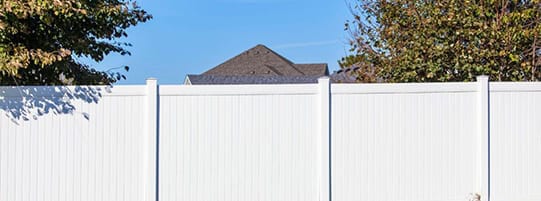
Professional-grade vinyl is a different product. It’s thicker, UV-stabilized, and manufactured to withstand sustained heat and humidity without warping, bowing, or sagging. High-quality vinyl fencing typically carries a lifetime manufacturer warranty — something that low-grade material simply can’t offer because the manufacturer knows it won’t last.
For homeowners in communities like Winter Garden, Windermere, or the HOA-heavy neighborhoods around Lake Nona, vinyl is one of the most popular choices precisely because it’s low maintenance and tends to meet HOA aesthetic standards. You’re not painting it, sealing it, or worrying about rot. Once it’s in, it largely takes care of itself.
From a lifespan standpoint, quality vinyl holds up for 20 to 30 years in Central Florida’s climate with routine cleaning. That’s a meaningful difference from wood, which — even with sealant applied regularly — typically needs significant repairs or full replacement within 8 to 12 years in this environment. The upfront cost of vinyl is higher than wood, but the long-term math usually favors it considerably.
One thing worth knowing: vinyl’s performance is only as good as the installation behind it. Posts need to be set with proper concrete depth, especially in Central Florida’s sandy soil. A vinyl fence installed with shallow posts in loose ground won’t survive a serious storm regardless of the panel quality. Installation standards matter as much as material grade.
How Does Aluminum Fencing Perform Against Central Florida Storms?
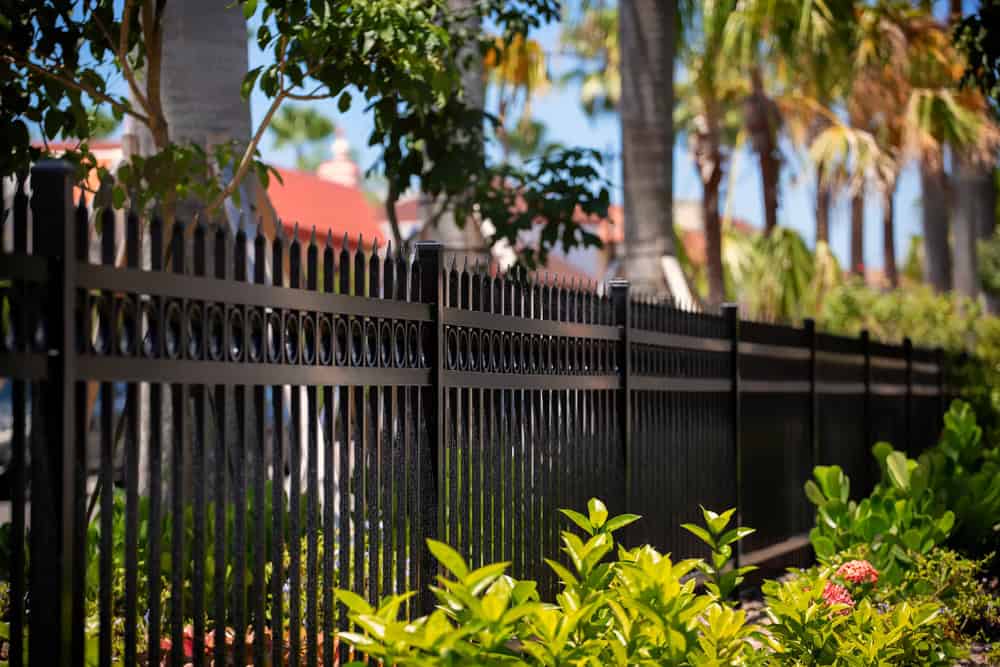
Aluminum fencing is one of the most durable options available for Central Florida homeowners, and it’s particularly well-suited to properties where both aesthetics and weather resistance matter. It doesn’t rust, it doesn’t rot, and it handles Central Florida’s humidity without complaint. A quality aluminum fence installed with proper concrete footings can last 30 to 50 years — longer than most of the other structures on your property.
The storm performance question is worth addressing directly. Aluminum fencing holds up well in high-wind events because it’s structurally rigid and, depending on the style, allows wind to pass through the openings rather than catching it like a solid panel does. That said, the installation is critical. Aluminum posts need to be set deep enough and anchored in concrete to stay put when winds pick up. Decorative aluminum that’s been properly installed is among the most hurricane-resilient options in the decorative fence category.
For homeowners near pools — which is a large portion of Central Florida’s residential market — aluminum is a natural fit. It meets Florida’s pool barrier requirements, it looks clean and intentional, and it doesn’t require the ongoing maintenance that wood demands. Communities around Dr. Phillips, Celebration, and the newer developments in Apopka frequently see aluminum as the go-to choice for pool enclosures and backyard perimeter fencing.
Cost-wise, aluminum typically runs in the range of $25 to $45 per linear foot installed, depending on style, height, and site conditions. That’s comparable to quality vinyl, and the lifespan often exceeds it. If you’re weighing long-term value against upfront cost, aluminum makes a strong case — especially when you factor in that it essentially never needs painting, sealing, or rot repair.
Powder-coated finishes on aluminum add another layer of durability and UV resistance, which matters in a climate where sun exposure is relentless. Most quality aluminum fencing comes in a range of colors and styles, so it’s not a purely utilitarian choice — it can genuinely enhance curb appeal while doing a serious job.
Wood and Chain Link Fences in Central Florida: What You Should Know
Wood and chain link fences occupy very different positions in the Central Florida market, but both deserve honest coverage because they’re still widely used and, in the right circumstances, genuinely practical.
Wood fencing is the most traditional choice and still the most visually warm option for residential properties. Chain link is the most cost-effective and, in some ways, one of the most structurally sound options for large lots, commercial properties, and pet containment. Neither is a bad choice by default — but both come with Central Florida-specific considerations that are worth understanding before you commit.
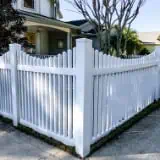
How Long Does a Wood Fence Last in Central Florida's Humidity?
Wood fencing can work in Central Florida, but you need to go in with realistic expectations. Central Florida’s combination of heat, humidity, UV exposure, and termite pressure is genuinely hard on wood — harder than almost anywhere else in the country. A wood fence that might last 20 years in the Midwest will typically need significant attention within 8 to 12 years here, even with regular maintenance.
That said, not all wood performs equally in this climate. Cedar holds up considerably better than standard pine because it has natural oils that resist moisture and insects. Pressure-treated lumber adds another layer of protection against rot and termite activity. Species selection and treatment matter — a lot. A cedar fence installed with proper post depth and quality hardware will outlast a cheap pine fence by years.
Maintenance is the other honest conversation. Wood fences in Central Florida need to be stained or sealed every two to three years to stay ahead of moisture damage. You’ll also want to inspect annually for early signs of rot, warping, or insect activity — especially in the post bases, which are in constant contact with soil. If that level of upkeep fits your schedule and budget, wood can still be a beautiful, functional choice. If it doesn’t, vinyl or aluminum will likely serve you better.
One thing we’re particularly proud of is our access to material that most local contractors simply can’t offer. We source our wood through the largest, highest-quality wood mill in Florida — a supplier that only works with high-volume contractors. That means the boards we install are wider, thicker, and structurally superior to what you’ll find through smaller operations or retail suppliers. Customers who’ve compared quotes and materials side by side have noticed the difference. It’s not a marketing claim — it shows up in the finished fence.
We also build wood fences on-site rather than using prefabricated panels, which means every fence is cut and constructed to the exact dimensions of your property. That approach takes more time, but it produces a more structurally sound result — and in Central Florida’s weather conditions, structural integrity is not a detail worth skipping.
Is Chain Link Fencing a Good Option for Central Florida Properties?
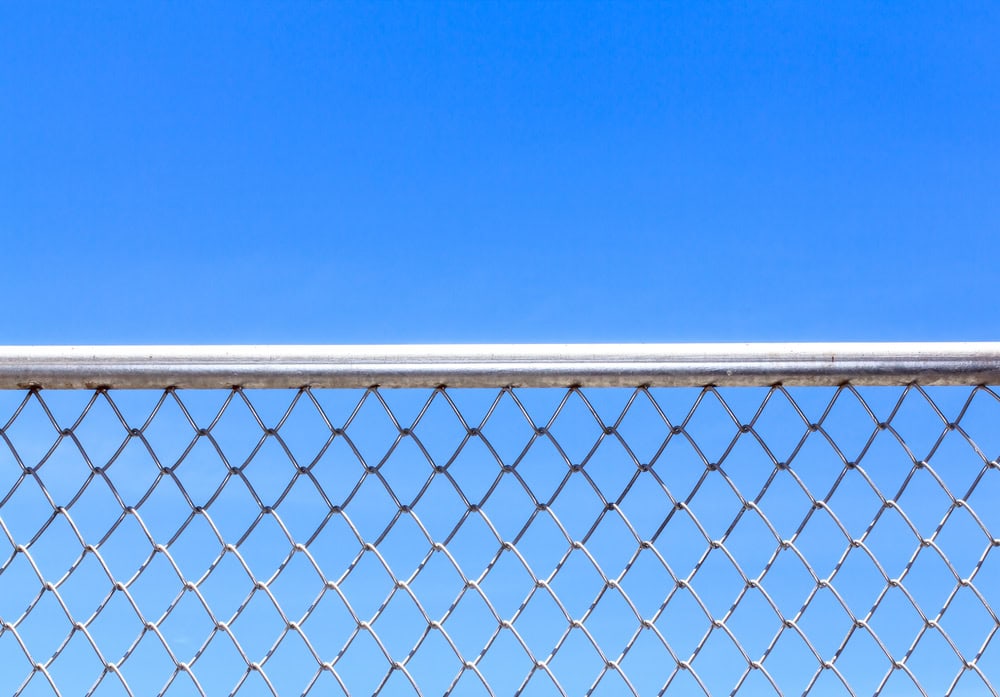
Chain link fencing doesn’t get much attention in residential conversations, but it’s one of the most practical and weather-resistant options available — and it’s significantly underrated for the right applications. Its open structure means wind passes through rather than pushing against it, which actually makes it one of the better-performing fence types during tropical storms and hurricanes. Solid privacy panels act like sails in high winds; chain link doesn’t.
For properties in Lake County, Marion County, or the more rural stretches of Sumter County where lot sizes are larger and the primary need is perimeter security, pet containment, or livestock management, chain link is a genuinely smart choice. It’s durable, low-maintenance, and cost-effective at scale. Galvanized chain link resists rust and corrosion well in Central Florida’s humidity, and vinyl-coated versions add another layer of protection and a cleaner visual.
Commercial properties across Central Florida — warehouses, storage facilities, school campuses, parks — rely heavily on chain link for exactly these reasons. It’s functional, fast to install, and holds up without demanding much in return. If your priority is keeping dogs in, defining a property boundary, or securing a commercial site without a large budget, chain link deserves a serious look.
The perception that chain link is purely industrial or unattractive has softened considerably as more homeowners discover that a well-installed, properly finished chain link fence can look intentional and clean rather than temporary. Height, gauge, and finish all affect the final appearance, and the range of options available today is broader than most people realize.
One practical note specific to Central Florida: if your property is in an HOA-governed community — and a significant portion of neighborhoods in Orange, Seminole, and Osceola counties are — you’ll want to confirm whether chain link is permitted under your CC&Rs before moving forward. Many HOAs in communities around Sanford, Oviedo, and Kissimmee have restrictions on visible chain link in front or side yards. We handle the permit and HOA verification process as part of our standard workflow, so you’re not navigating that on your own.
Choosing the Right Fence Material for Your Central Florida Home
There’s no single right answer when it comes to fence materials in Central Florida — but there are clearly better and worse fits depending on your property, your priorities, and how much ongoing maintenance you’re willing to take on. Vinyl and aluminum are the strongest performers for long-term durability and low upkeep in this climate. Wood is viable with the right species, quality materials, and realistic maintenance expectations. Chain link earns its place on larger lots, commercial properties, and anywhere that function outweighs form.
What matters as much as the material is the quality of what goes into the ground. Post depth, concrete footings, and on-site construction versus prefabricated panels all affect how your fence performs when Central Florida’s weather tests it — and it will.
If you’re ready to figure out what makes sense for your specific property, we’ve been helping homeowners and businesses across Lake, Orange, Seminole, Osceola, Brevard, Volusia, Polk, Sumter, and Marion counties make that call since 2004. Reach out for a straightforward conversation and a quote with no hidden costs attached.