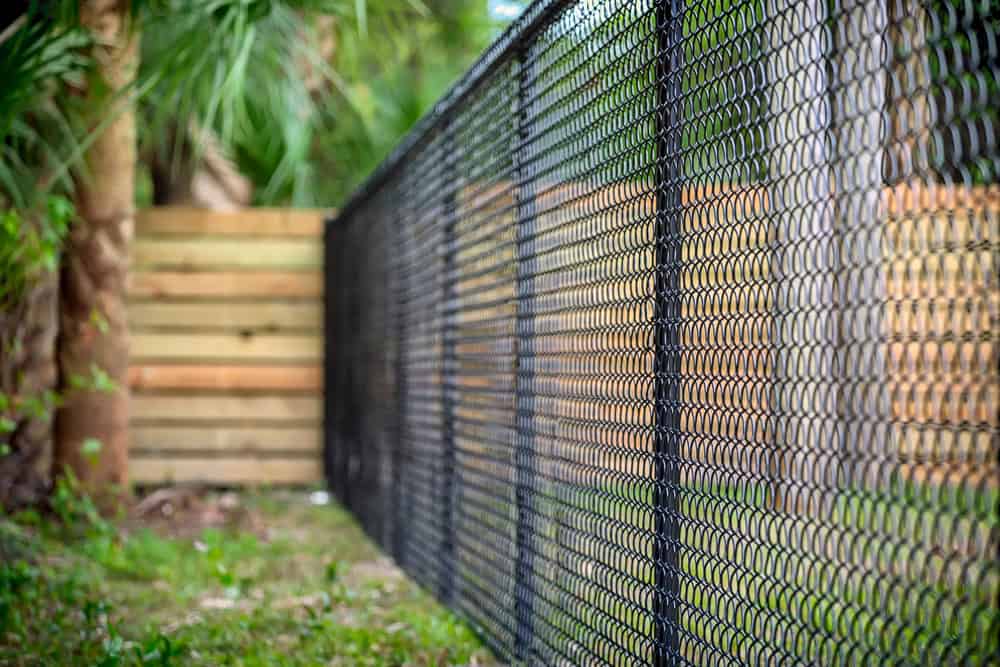
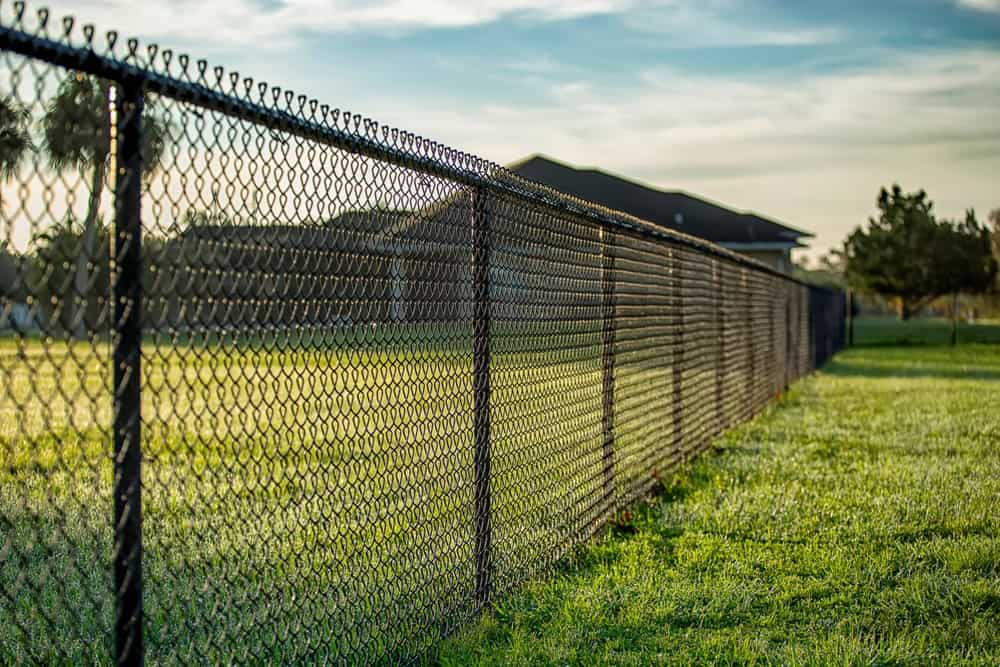
You get a fence that bends in 100+ mph winds without breaking. The open weave design lets wind pass through instead of creating resistance like solid fencing does, which is why chain link consistently outperforms other materials during hurricane season.
Your fence won’t warp, rot, or need repainting every few years. Galvanized and vinyl-coated chain link resists rust even in Florida’s humid, salty air, giving you 20+ years of use with almost zero maintenance beyond an occasional rinse.
You’re looking at $10 to $20 per linear foot for materials and installation combined. That’s significantly less than wood, vinyl, or ornamental options, and you won’t be paying for repairs or replacements down the road. Most installations wrap up in one to three days, so you’re not dealing with weeks of disruption to your property or routine.
The transparency works both ways. You can see what’s happening outside your fence line, and your lawn gets full sunlight instead of being shaded out by solid panels.
We started in Metro Atlanta in 1992 and brought that same approach to Central Florida in 2004. We’re licensed, bonded, and insured, and we’ve been installing chain link fencing across Lake, Orange, Seminole, and surrounding counties for over two decades now.
We’re not the cheapest option in Ferndale, FL, and that’s intentional. You’re paying for galvanized steel that won’t rust out in three years, professional installation that accounts for Florida’s sandy soil and shifting ground, and a team that pulls permits and does the job correctly the first time.
Orlando Magazine recognized us in their 2025 Home Design Awards because we use quality materials and don’t cut corners. That matters when you’re dealing with a fence that needs to survive hurricane season year after year.
We start with a site visit to measure your property, check soil conditions, and confirm exactly where the fence will go. You’ll know upfront what the project costs, how long it takes, and what materials we’re using. No surprises, no hidden fees.
Next, we handle permits if your project requires them. Ferndale, FL has specific requirements depending on fence height and placement, and we make sure everything is compliant before we dig the first post hole.
Installation begins with setting terminal posts at corners and gates. These posts carry the most load, so they get concrete footings that account for Florida’s sandy soil. Line posts go in next, spaced according to your fence height and the wind load requirements for this area.
We stretch the chain link fabric between posts, tension it properly, and secure it with tension bars and bands. Gates get installed with heavy-duty hinges and latches that won’t sag or bind over time. The whole process typically takes one to three days depending on your property size and how many gates you need.
Ready to get started?
You’re getting galvanized steel chain link fabric with a zinc coating that resists rust and corrosion. If you want additional protection or a different look, vinyl-coated options come in black, brown, and green. The coating adds another layer of weather resistance and can help the fence blend into your landscaping.
Fence height typically ranges from four to six feet for residential properties in Ferndale, FL. Taller fences are available if you need more security or privacy, though you’ll want to confirm local height restrictions before going above six feet.
Gates are custom-built to match your fence height and opening width. We install them with adjustable hinges and gravity latches or locking mechanisms depending on what you need. If you’re securing a pool area, we make sure gate hardware meets Florida’s pool barrier requirements.
Terminal posts get concrete footings sized for Florida wind loads. Line posts are set in concrete or driven depending on your soil conditions and fence specifications. We’re accounting for the fact that Ferndale, FL sits in a hurricane zone where wind resistance isn’t optional.
You can add privacy slats if you want to block sightlines without replacing the entire fence with a solid material. Slats slide into the chain link mesh and come in various colors. They reduce visibility by about 90% while still allowing some airflow.
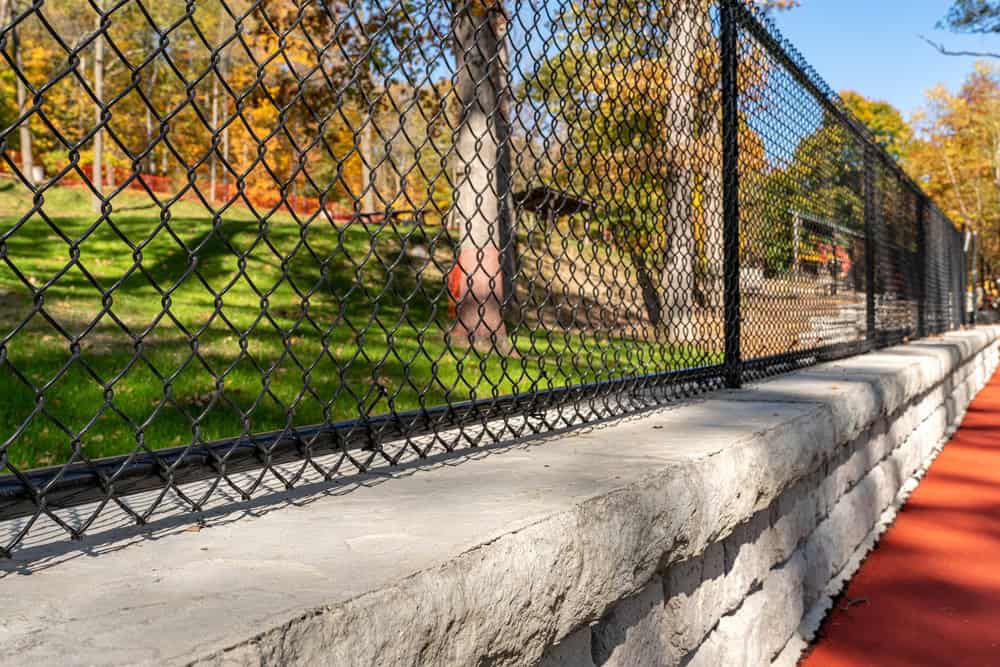
A properly installed chain link fence lasts 20 years or more in Florida, even with the humidity, salt air, and hurricane exposure we deal with here. Galvanized chain link has a zinc coating that prevents rust, and vinyl-coated options add another protective layer that extends the lifespan even further.
The key is professional installation that accounts for Florida’s conditions. Posts need to be set deep enough and secured properly in our sandy soil. If the posts shift or lean, the fence fabric loses tension and starts to fail prematurely.
You’re not dealing with wood that rots or warps in the humidity. You’re not repainting every few years like you would with a metal fence that wasn’t galvanized properly. Chain link requires almost no maintenance beyond hosing it down occasionally to remove pollen, dirt, or salt buildup if you’re near the coast.
Chain link is one of the best-performing fence types in high winds because of its open weave design. Wind passes through the mesh instead of hitting a solid surface, which reduces wind load by 60 to 80 percent compared to wood or vinyl privacy fencing.
The flexible mesh can bend under extreme wind pressure and then return to its original shape once the wind dies down. Solid fences act like sails and either rip apart or pull the posts out of the ground. Chain link moves with the wind instead of fighting it.
That said, installation quality matters. Posts need proper concrete footings sized for hurricane-force winds. Terminal posts at corners and gates carry the most stress and require deeper footings than line posts. If the installation is done correctly with the right materials, your chain link fence will be standing after the storm while your neighbors are dealing with repairs.
Galvanized chain link has a zinc coating applied to the steel wire, which prevents rust and corrosion. It’s the standard option and performs well in Florida’s climate. The zinc coating holds up to humidity, rain, and even salt air if you’re near the coast.
Vinyl-coated chain link adds a layer of colored vinyl over the galvanized wire. You get the same rust protection from the zinc coating, plus an additional barrier from the vinyl. The coating comes in black, brown, green, and other colors, so you can match your landscaping or make the fence less visually prominent.
The vinyl coating does add to the upfront cost, usually a few dollars more per linear foot. It also makes the fence slightly more visible than bare galvanized steel, which has a more neutral appearance. Both options last 20+ years with minimal maintenance, so the choice comes down to whether you want the color options and extra protection or prefer to keep costs lower with standard galvanized.
Chain link fence installation in Ferndale, FL typically runs $10 to $20 per linear foot including materials and labor. The final cost depends on fence height, whether you choose galvanized or vinyl-coated fabric, how many gates you need, and site-specific factors like soil conditions or terrain.
A standard four-foot residential fence costs less per foot than a six-foot fence because it uses shorter posts and less fabric. Vinyl-coated chain link adds a few dollars per linear foot compared to galvanized. Gates add to the total based on width and hardware specifications.
You’ll see lower quotes from unlicensed contractors using thinner gauge wire or skipping proper concrete footings. Those installations fail faster, especially in Florida’s wind and weather. You end up paying twice—once for the cheap installation and again to fix or replace it. Quality materials and professional installation cost more upfront but eliminate those repeat expenses.
Permit requirements in Ferndale, FL depend on fence height, placement, and whether you’re in a residential or commercial zone. Most residential chain link fences require a permit if they exceed a certain height or if they’re located in a front yard setback area.
Lake County has specific regulations about fence height limits, setback distances from property lines, and corner lot visibility requirements. If your property includes a pool, Florida law requires specific barrier standards that affect gate hardware, fence height, and spacing between the ground and bottom of the fence fabric.
We handle the permit process as part of your installation. We know what Lake County requires, what documentation needs to be submitted, and how long approval typically takes. Skipping permits might save time upfront, but it creates problems if you ever sell your property or if a neighbor files a complaint. Unpermitted work can result in fines and forced removal.
Privacy slats are the most common way to add privacy to an existing chain link fence. These are vertical strips—usually vinyl or aluminum—that weave through the chain link mesh. They block about 90 percent of visibility while still allowing some airflow, which matters in Florida where solid fences can create wind resistance problems.
Slats come in multiple colors so you can match your home or landscaping. Installation is straightforward—they slide into the existing fence fabric and lock into place. You can add them during initial installation or retrofit them to an existing fence later.
Another option is privacy screening fabric, which attaches to the fence with zip ties or clips. It’s less durable than slats but costs less and installs faster. The fabric blocks wind more than slats do, so it’s not ideal if you’re in an area with frequent storms. For full privacy without compromising wind resistance, slats are the better long-term choice.
Other Services we provide in Ferndale