
Chain link done right means your yard is contained, your property line is defined, and you’re not calling a contractor back six months later because something shifted. That’s the standard not the exception.
Lake County has a terrain situation that most of Central Florida doesn’t. The Clermont and Minneola areas sit on the Central Florida Ridge, with elevation changes that can reach over 300 feet. On a sloped lot, a fence that isn’t properly graded and tensioned leaves gaps at the bottom which defeats the point entirely if you have a dog, a pool, or young kids. Getting that right takes more than just driving posts into the ground.
Then there’s the water. With over 1,400 lakes, canals, and drainage systems throughout Lake County, a significant number of properties sit adjacent to water. That environment accelerates corrosion on uncoated metals and can trigger environmental setback requirements that an inexperienced contractor might not even know to check. Galvanized and vinyl-coated chain link handles the humidity and moisture exposure that comes with lakefront and canal-adjacent living and lasts 20 to 30 years doing it with virtually no maintenance required.
Our primary office is in Tavares the county seat of Lake County. That’s not a service area claim. That’s where we’re located. When you call for a chain link fence installation in Clermont, Leesburg, Mount Dora, or Eustis, you’re calling a company whose team is already here.
We founded the business in 1992 and have been serving Central Florida since 2004. That’s over two decades of working in this specific region understanding the soil conditions, the permit requirements across different municipalities, and the kind of terrain that makes installation more complicated than it looks on paper. Most competitors operating in Lake County are dispatching crews from outside the county. We live here.
We’re licensed, bonded, and insured across all nine Central Florida counties and Lake County is explicitly listed as a primary service area. That coverage is real, documented, and matters when something goes wrong.

It starts with a site visit. We come out to your property, look at the actual ground, and give you a transparent quote with no hidden costs built in. If your lot is on one of Clermont’s hillside streets or backs up to a drainage swale near the Harris Chain of Lakes, that gets factored in at the estimate stage not after you’ve already signed something.
From there, we handle permitting for you at no extra charge. In unincorporated Lake County, many residential fence installations don’t require a permit at all under Lake County Code Section 18.100.120. But if you’re in an incorporated city like Clermont, Minneola, or Leesburg, the rules are different each municipality has its own requirements, and pool barrier fences require permits regardless of location. We know which situation you’re in and handle it accordingly.
Once permits are cleared, most residential chain link installations are finished in one to two days. Posts go in first, set in concrete at a minimum depth of 30 inches Florida’s sandy soil makes that depth non-negotiable if you want posts that don’t shift after a heavy summer rain. The mesh is stretched and tied, gates are hung and aligned, and the site is cleaned up before the crew leaves. You’re not left with a half-finished yard and a contractor who’s hard to reach.

Ready to get started?
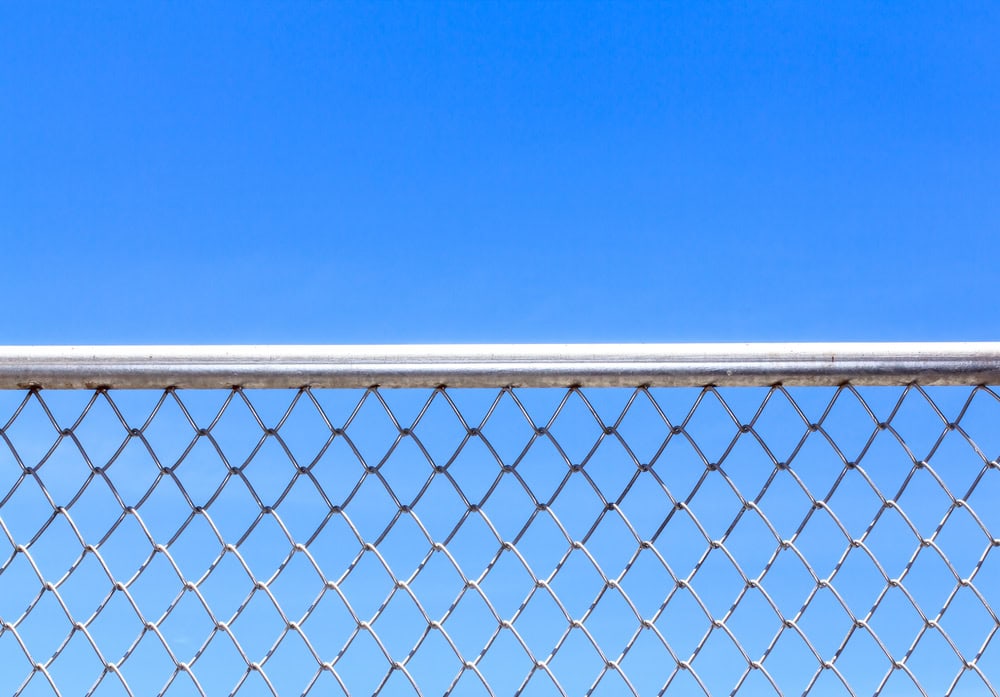
Not every chain link fence is built the same, and in Lake County, the differences matter. Standard residential installations use galvanized or vinyl-coated chain link fabric typically 11-gauge or 9-gauge wire with a 2-inch diamond opening. Vinyl-coated black chain link is worth knowing about if your property is in an HOA community or if you simply want a fence that blends into the landscape rather than announcing itself. It also adds a layer of corrosion protection that’s meaningful in Lake County’s humid, water-adjacent environment.
For rural and acreage properties in areas like Umatilla, Grand Island, or the western reaches of the county near Mascotte and Groveland, chain link is often the only fencing option that makes practical sense over large distances. Dig guards and bottom tension wire are available for pet owners who need to address the specific problem of dogs that try to go under rather than over. For pool enclosures, we build installations to meet Florida Statute 515.29 48-inch minimum height, no exterior horizontal members that could serve as footholds, and self-closing, self-latching gate hardware.
We also offer repair and replacement for existing chain link fences that are sagging, leaning, or damaged after storm season. If you have an older fence on your property that’s been through a few Lake County wet seasons and is starting to show it, that’s a conversation worth having before it becomes a full replacement.

In unincorporated Lake County, the answer is generally no Lake County Code Section 18.100.120 allows fences to be installed in any zoning district without a permit. That’s genuinely good news for homeowners on rural and semi-rural properties throughout the county, and it simplifies the process considerably.
That said, if your property is within an incorporated city Clermont, Leesburg, Tavares, Minneola, Mount Dora, or Eustis you’re subject to that city’s municipal fence code, which may require a permit, a site plan, and a property survey. The city of Minneola, for instance, requires a permit application for any fence installation or replacement. Pool barrier fences require permits regardless of where you are in Lake County, under Florida Statute 515.29. We handle the permitting process for you, including identifying which rules apply to your specific address, at no extra charge.
For most residential properties, the physical installation takes one to two days. Day one is typically post setting posts go into the ground and are set in concrete, then left to cure. Day two is the mesh installation, gate hanging, and final cleanup. The crew doesn’t leave until the site is clean and the fence is functional.
The overall timeline from first contact to a finished fence depends on whether permits are required. In unincorporated Lake County where no permit is needed, scheduling can move quickly. In incorporated cities where a permit must be pulled first, you’re typically looking at a few additional weeks for municipal processing. We’ll give you a realistic timeline at the estimate stage so you’re not left guessing. If you’re planning around a specific date a new dog arriving, a pool being finished, a move-in date that’s worth mentioning upfront so the schedule can be built around it.
Galvanized chain link is the standard, and it performs well in Florida’s humidity. But for properties in Lake County that are adjacent to lakes, canals, or drainage systems which is a significant portion of the county given its 1,400-plus water bodies vinyl-coated chain link is worth the upgrade. The vinyl coating adds a meaningful layer of protection against corrosion in moisture-rich environments, and it extends the fence’s lifespan closer to the 25-to-30-year end of the range rather than the lower end.
Vinyl-coated black chain link also has a practical advantage in HOA communities. Many HOAs in Clermont, Leesburg, and the Tavares area that restrict raw galvanized chain link will approve black vinyl-coated chain link because it reads as less industrial and blends better with landscaping. If you’re in a community with an architectural review board, it’s worth asking about this option before you commit to a material. We can walk you through what’s typically approved in your area and what the HOA documentation process looks like.
Clermont and Minneola sit on the Central Florida Ridge the highest natural terrain in peninsular Florida, with some lots reaching over 300 feet in elevation. That means grade changes are a real factor for a significant number of Lake County homeowners, and they affect how a fence has to be installed.
On a sloped lot, the two main approaches are stepping and racking. Stepping means the fence runs in level sections that drop in increments, which can leave triangular gaps at the bottom of each step. Racking means the fence follows the slope continuously, keeping the bottom rail close to the ground throughout. For pet containment or pool barriers where gaps at the bottom defeat the purpose racking is usually the right call, but it requires proper tensioning technique to execute without the mesh going slack or pulling unevenly. A contractor who only works on flat lots in Orange County or the coastal markets doesn’t encounter this problem regularly. We’ve been installing chain link on sloped properties in the Clermont hills long enough to know exactly how to handle it.
Yes and for large rural properties in Lake County, it’s often the most practical choice by a significant margin. A 5-acre parcel needs roughly 1,900 linear feet of fencing to enclose the perimeter. Running that distance in wood or vinyl is expensive and maintenance-intensive. Chain link covers the same ground at a fraction of the cost, handles contact with animals without warping or splitting, and holds up through wet season without the post-rot issues that wood fencing develops in Florida’s sandy, moisture-retaining soil.
For properties in areas like Umatilla, Grand Island, Sorrento, or the rural western portions of Lake County near Mascotte and Groveland, chain link also serves as a practical wildlife barrier. Deer, wild hogs, and coyotes are documented in those areas particularly near the Ocala National Forest border on Lake County’s eastern edge. Dig guards and bottom tension wire address animals that try to go under, and fence height can be specified for the application. We install agricultural and residential chain link across Lake County’s rural areas with post depths and gauge appropriate for the terrain and the animal pressure involved.
The most common signs that a chain link fence needs attention are leaning or tilting posts, sagging mesh that’s pulling away from the top rail, rust spots spreading across the fabric, and gates that no longer close or latch properly. Any one of those issues can often be repaired without replacing the entire fence it depends on how far the damage has spread and whether the posts themselves are still structurally sound.
In Lake County, the wet season is usually what accelerates the deterioration. Heavy summer rains saturate the sandy soil around post bases, and if those posts weren’t set deep enough in concrete when the fence was originally installed, they start to shift. Once a post leans, the tension in the mesh changes and the problem spreads. If you’ve got a fence that’s been through several Lake County summers and is starting to lean or sag, we can assess whether targeted repairs will hold or whether the post bases are compromised enough that replacement is the more cost-effective path. Getting that assessment done honestly without pressure toward the more expensive option is part of how we operate.