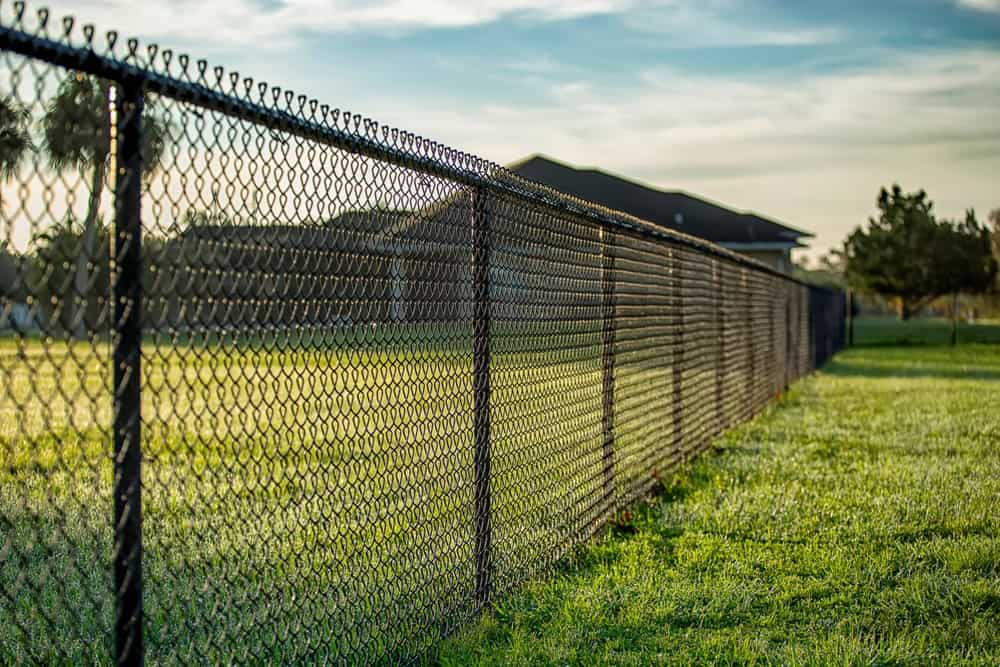
Your property becomes harder to access without permission. That’s not marketing talk – it’s basic physics. A properly installed chain link fence creates a real barrier that takes time and effort to breach, which is exactly what stops most break-ins before they happen.
Your kids and pets stay where they’re supposed to. No more watching the driveway every time the door opens. No more worrying about your dog finding that one gap in the yard. You get a contained space that actually works.
Your home value goes up without the maintenance burden going up with it. Potential buyers in Central Florida actively look for fenced properties because they understand the security and containment value. You’re not just installing a fence – you’re making an investment that pays back when it’s time to sell, and costs almost nothing to maintain in between.
We’ve been installing fences across Central Florida for two decades. We’re not new to Palomar, and we’re not new to the challenges Florida weather throws at fencing. We know what holds up and what doesn’t.
Our installations use domestic chain link that’s up to five times stronger than the imported material many companies use. The galvanization process we spec resists rust even in Florida’s humidity and salt air. These aren’t small details – they’re the difference between a fence that lasts 20+ years and one that starts failing in five.
We serve Lake, Orange, Seminole, Brevard, Volusia, Osceola, Polk, Sumter, and Marion counties. That’s a lot of ground, but we’re not stretched thin. We’re established enough to handle the volume and local enough to show up when we say we will.
You reach out, and we schedule a time to assess your property. We’re looking at terrain, measuring the perimeter, identifying any drainage or access issues, and figuring out exactly what you need. No guessing, no ballpark estimates that change later.
We give you transparent pricing based on that assessment. You’ll know the cost per linear foot, the total project cost, and what’s included. If there are potential issues – like needing to work around easements or flood zones common in Central Florida – we tell you upfront, not after we’ve started digging.
Our crew shows up with the right materials and equipment. We set posts, stretch fabric, install gates, and clean up the site. The installation is fast because we’ve done this thousands of times, but we’re not cutting corners to save time. Every post gets set to the right depth. Every section gets tensioned correctly.
You do a final walkthrough with us. If something’s not right, we fix it before we consider the job done. Then you’ve got a fence that works.
Ready to get started?
You’re getting galvanized steel chain link designed for Florida’s environment. This isn’t the thin imported material that rusts out in a few years. The galvanization process creates a zinc coating that protects against moisture, salt air, and the constant humidity we deal with in Central Florida.
Height options range from three and a half feet for small dog containment up to six feet for larger breeds and full privacy screening. Most Palomar homeowners go with four to six feet depending on whether they’re focused on pet containment, security, or both.
Gate installation is included. We’re not handing you a fence with no way to access your own yard. You get functional gates sized for your needs – whether that’s a standard walk-through or something wide enough for lawn equipment and vehicles.
The installation accounts for Florida’s hurricane season. Chain link allows wind to pass through instead of catching it like a solid fence would. That’s a real advantage when storms roll through Central Florida. You’re not replacing fence sections every time we get hit with high winds.
You’re looking at somewhere between ten and twenty dollars per linear foot for residential chain link installation in Florida. That range exists because several factors affect the final cost.
Height matters. A three-and-a-half-foot fence uses less material and fewer labor hours than a six-foot fence. Gauge matters too – thicker wire costs more but lasts longer and resists damage better.
Your property’s terrain affects installation cost. Flat, accessible yards are straightforward. Properties with slopes, rocky soil, or limited access require more time and sometimes specialized equipment. If we’re working around existing landscaping, utilities, or structures, that adds complexity.
Coating options change the price. Standard galvanized chain link sits at the lower end of that range. Vinyl-coated chain link costs more upfront but adds color options and extra corrosion resistance. For most Palomar properties, standard galvanized is more than enough – but the choice is yours.
A properly installed chain link fence lasts twenty years or more in Central Florida, even with our humidity, salt air, and hurricane seasons. That’s not a best-case scenario – that’s standard performance for quality materials installed correctly.
The galvanization process is what makes this possible. Zinc coating protects the steel from moisture and oxidation. In coastal areas or properties near bodies of water, you might see some surface rust after fifteen years, but the structural integrity holds. The fence still functions – it just might not look showroom-new.
Maintenance extends that lifespan even further. Hosing down your fence a few times a year to remove pollen, dirt, and salt buildup takes maybe twenty minutes. If you’re near the coast, a mild soap and water scrub once a year keeps corrosion from getting a foothold. That’s the entire maintenance requirement.
Compare that to wood fencing in Florida. You’re looking at rot, termite damage, and constant upkeep. Or vinyl, which cracks under impact and fades in our sun. Chain link just sits there doing its job year after year with almost no attention from you.
Yes, if you choose the right height and the installation is done properly. Most dogs can’t fit through the diamond-shaped openings in chain link fabric, and they can’t chew through galvanized steel like they can wood or vinyl.
For small dogs under thirty pounds, a three-and-a-half-foot fence is usually sufficient. They don’t have the jumping ability to clear that height, and the fence gives them a clear visual boundary. For medium to large breeds, you want six feet minimum. Larger dogs can jump, and some breeds are determined enough to try.
The bottom of the fence matters as much as the height. We install chain link with minimal ground clearance, so diggers can’t easily tunnel under. If you’ve got a dedicated digger, we can add a dig guard – basically extending the fabric below ground level or adding a barrier along the base.
Gates are the weak point in most dog containment systems. We install gates with proper latching mechanisms and ensure they’re sized appropriately. A gap-prone gate defeats the purpose of a solid fence line. Your dog will find that weakness every single time.
Chain link performs better than most fencing types during Florida hurricanes because of how it handles wind. The open weave lets wind pass through instead of catching it like a sail. Solid fences – wood, vinyl, even some metal panel designs – take the full force of hurricane winds and often fail.
During major storms, you might see some fabric loosening if winds are strong enough, but the posts and framework typically stay intact. That means repairs after a hurricane are usually minor – retensioning fabric or replacing a damaged section – rather than rebuilding entire fence lines.
The key is proper installation. Posts need to be set deep enough and secured correctly. In Central Florida, we’re dealing with sandy soil in many areas, which requires specific techniques to ensure posts don’t shift or heave during storms. Concrete footings sized appropriately for your soil type and fence height make the difference.
We’ve seen chain link fences in Palomar and surrounding areas come through multiple hurricane seasons without significant damage. The same can’t be said for wood privacy fences or some of the cheaper vinyl installations. When you’re choosing fencing in Florida, wind resistance isn’t optional – it’s a core requirement.
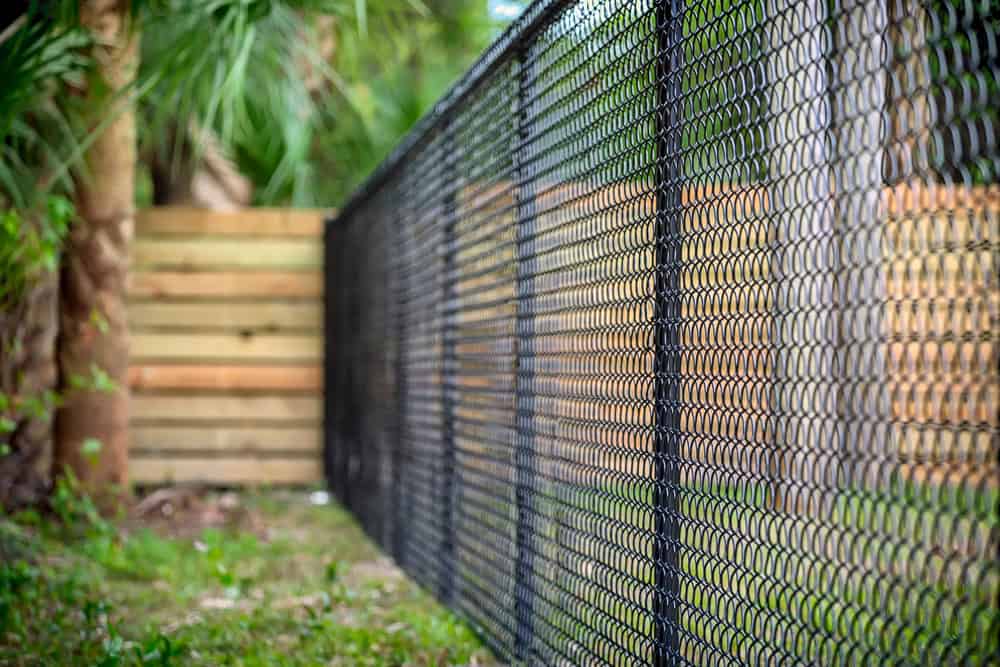
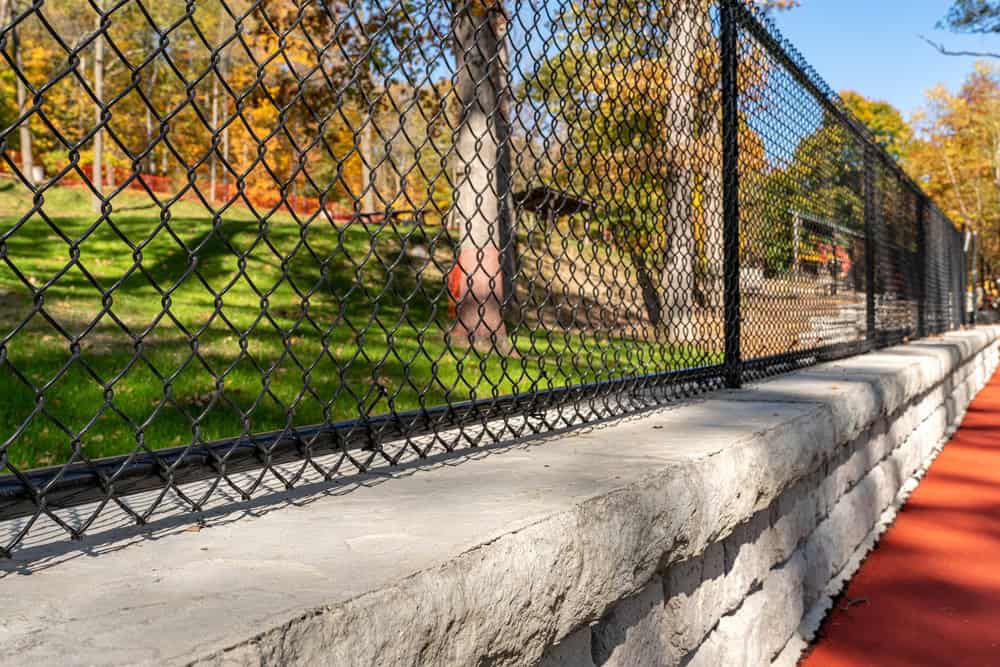
Standard galvanized chain link has that classic silver-gray metallic look, but vinyl-coated options give you color choices. Black and green are the most common – black tends to blend into backgrounds and look less visible, while green works well if you’ve got landscaping or want the fence to disappear into your yard.
The coating isn’t just aesthetic. Vinyl-coated chain link adds another layer of protection against corrosion, which can be worth it if your property is in a high-salt area or you want to maximize lifespan. The coating also makes the fence slightly more comfortable to grab, which matters if you’ve got kids climbing or you’re using it for sports containment.
Height and gauge give you functional variety. Residential installations typically use nine or eleven gauge wire – eleven is standard for most applications, nine is heavier and more durable if you need extra strength. Commercial properties often go with six or nine gauge for high-security applications.
You can also add privacy slats – vinyl strips woven through the chain link fabric. This blocks visibility and wind while keeping the durability and cost benefits of chain link. Some Palomar homeowners use slats on street-facing sections for privacy while leaving backyard sections open for visibility. It’s your fence – you decide what works for your property.
Most residential fence installations in Central Florida require a permit, and Palomar is no exception. The permit process ensures your fence meets local setback requirements, height restrictions, and doesn’t interfere with easements or utilities.
Setback requirements dictate how close to property lines you can build. In many Florida communities, you need to stay a certain distance from the street and side property lines. Corner lots often have additional restrictions because of sight line requirements for traffic safety.
Easements are the bigger headache. Utility easements, drainage easements, and access easements can run through your property, and you typically can’t build permanent structures in those areas. We’ve dealt with plenty of Palomar properties where easements limit fence placement, especially in newer developments with extensive drainage infrastructure.
We handle permit applications as part of our service. We know what the local building department requires, we know how to read survey documents and identify easement issues, and we know how to get approvals without the back-and-forth that eats up weeks. You’re not navigating this process alone – and you’re not finding out after installation that you’ve got a code violation that needs to be corrected.
Other Services we provide in Palomar