Your fence should make your life easier, not add another item to your weekend to-do list. That’s exactly what vinyl delivers.
You’re looking at 20 to 30 years of durability without painting, staining, or sealing. Just rinse it with a garden hose a few times a year and you’re done. No rot from Grand Island’s humidity, no warping from summer heat, and no termites chewing through your investment.
Vinyl fences in Grand Island, FL are engineered with UV inhibitors that resist fading even under intense Central Florida sun. They’re built to handle winds up to 100 mph, which exceeds most Florida building code requirements. That means your fence stays standing when storms roll through, and you’re not dealing with repairs every hurricane season.
You get complete privacy when you want it, curb appeal that actually lasts, and a fence that doesn’t become a maintenance burden the moment it’s installed.
We serve Grand Island and the surrounding Central Florida communities with residential and commercial vinyl fence installation. We use top-grade vinyl and PVC materials because we’ve seen what happens when contractors cut corners in this climate.
Grand Island’s older homes—many built in the 1970s and 1990s—often have fences that are showing their age. We’ve replaced plenty of rotted wood and rusted chain link for homeowners who are tired of constant repairs. Our installations are built to handle the unique challenges of this area: high humidity, intense UV exposure, and the occasional hurricane.
You’ll work with installers who understand Florida building codes and know how to secure fence posts properly in our soil conditions. We’re transparent about pricing, we show up when we say we will, and we don’t leave your property until the job is done right.

We start with a consultation at your property. You’ll walk us through what you need—privacy, a boundary marker, something to keep pets contained—and we’ll measure the area and assess your property’s specific conditions.
Once you approve the estimate, we handle site preparation. That means marking utility lines, clearing the fence line, and making sure the ground is ready for installation. We set posts with proper spacing and depth to meet wind-load requirements, then install the vinyl panels with secure connections that won’t fail when the weather turns.
The installation itself is efficient. Most residential vinyl fence projects in Grand Island, FL take one to three days depending on size and complexity. We clean up completely when we’re finished, so you’re not left with debris or torn-up landscaping.
You’ll know exactly what to expect before we start, and you’ll have a fence that’s ready to handle Florida’s climate the day we leave.

Ready to get started?
You’re getting more than just fence panels. Every vinyl fence installation in Grand Island, FL includes a full site assessment, professional measurement, and installation that meets Florida building codes for wind resistance.
We use reinforced vinyl panels designed for Florida’s climate—not the thin, flimsy material that cracks after a few years. Posts are set deep enough to stay stable in our soil, and all connections are secured properly so panels don’t pop out during storms.
Vinyl fence installation cost in Grand Island, FL typically runs between $17 and $35 per linear foot depending on height, style, and site conditions. A standard privacy fence for a quarter-acre lot usually falls in the $3,500 to $6,500 range. That’s higher than wood upfront, but you’re saving money long-term because there’s no annual maintenance, no repainting, and no replacement boards every few years.
You’ll also get customization options—different heights, colors, and styles that fit your home’s look. Whether you need a six-foot privacy fence or a shorter decorative option, the installation process ensures it’s built to last decades in Central Florida’s challenging environment.

You’re looking at 20 to 30 years minimum with quality vinyl fencing in Grand Island, FL. That lifespan assumes you’re using high-grade vinyl with UV inhibitors, which is what we install.
Florida’s climate is tough on fencing. The combination of intense sun, high humidity, and occasional hurricanes destroys wood fences in 10 to 15 years, sometimes less. Vinyl doesn’t rot, warp, or attract pests, so it sidesteps the main problems that kill other fence materials in this area.
The key is proper installation. Posts need to be set deep enough and secured correctly, and panels need reinforcement to handle wind loads. When that’s done right, your vinyl fence will outlast wood by a decade or more without requiring any real maintenance beyond occasional rinsing.
Yes, when they’re installed correctly. Quality vinyl fencing can withstand winds up to 100 mph, which exceeds the standard requirements in most of Florida.
The Florida Building Code requires fences under six feet to handle either 75 mph fastest-mile wind speeds or 115 mph three-second gusts depending on your county. In Grand Island, proper installation means setting posts at the right depth, spacing them correctly, and using reinforced panels that won’t flex or fail under pressure.
We’ve seen poorly installed fences—vinyl and otherwise—get destroyed in storms because posts weren’t secured properly or panels weren’t reinforced. That’s why installation matters as much as material quality. A vinyl fence installed to code will stay standing through the storms that flatten wood fences and bend chain link.
Almost none. You’ll rinse it with a garden hose two or three times a year to remove pollen, dirt, and mildew. That’s it.
You’re not painting, staining, sealing, or replacing boards. You’re not treating for termites or scraping off rust. Vinyl doesn’t absorb moisture, so Florida’s humidity won’t cause rot or warping. The UV inhibitors in quality vinyl prevent fading and degradation from sun exposure.
If you get mildew buildup in shaded areas—which can happen in Grand Island’s humid climate—you can clean it with a mild soap and water solution. But you’re not dealing with the annual maintenance cycle that wood fences demand. Most homeowners spend less than an hour per year on vinyl fence maintenance, compared to several weekends of work with wood.
Upfront, yes. Long-term, no. Vinyl fence installation in Grand Island, FL costs about $17 to $35 per linear foot. Wood fencing runs $10 to $25 per linear foot initially, so you’re paying more at installation.
But wood requires annual maintenance—staining, sealing, and repairs—that costs $500 to $1,500 per year depending on fence size. Over 15 years, you’ll spend $7,500 to $22,500 on wood fence maintenance. Vinyl costs almost nothing to maintain over that same period.
Wood fences in Florida’s climate also need replacement sooner. You might get 10 to 15 years from wood if you maintain it religiously. Vinyl lasts 20 to 30 years without that effort. When you factor in maintenance costs and replacement timing, vinyl is the more cost-effective choice for most Grand Island homeowners who plan to stay in their homes long-term.
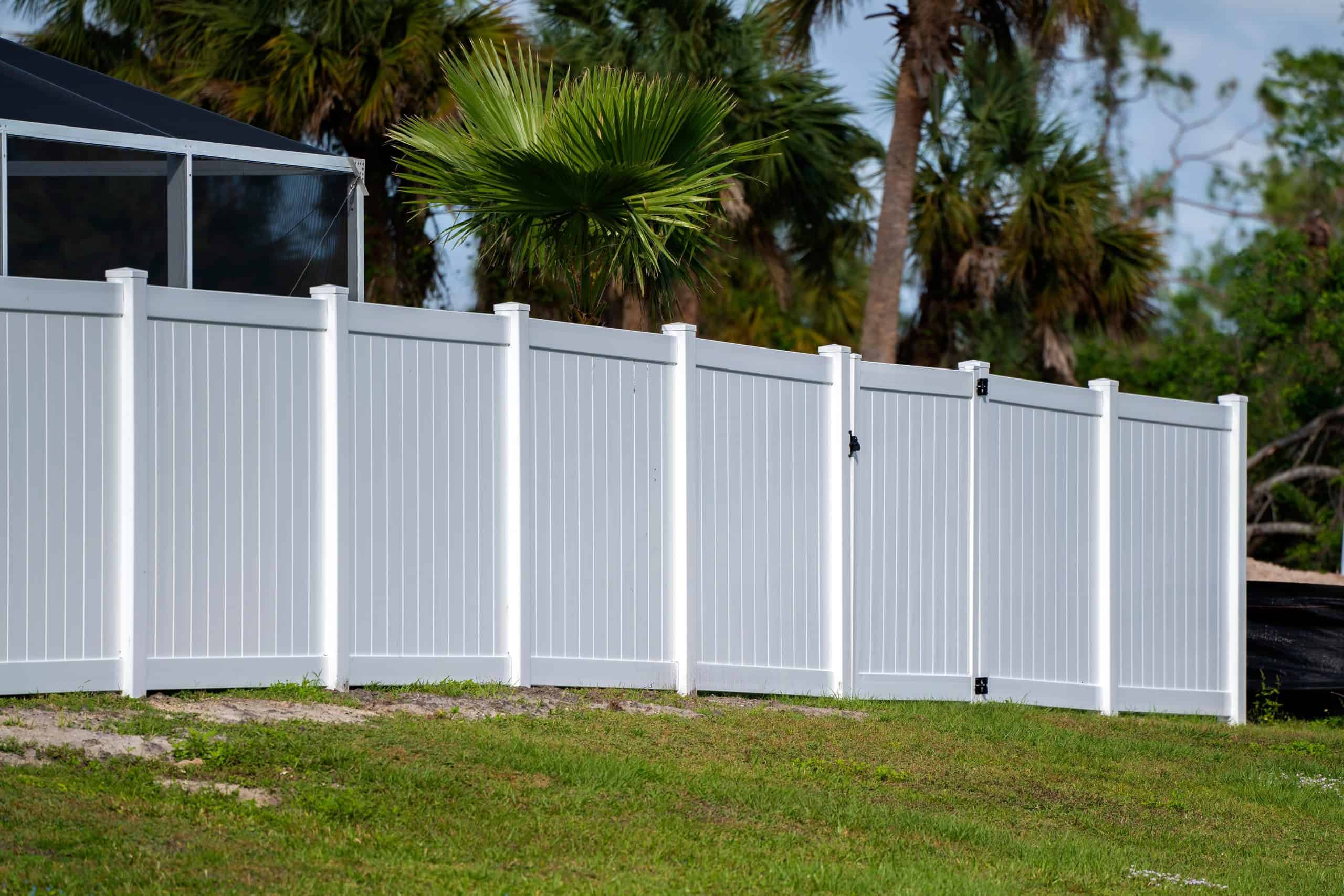
Six-foot solid vinyl privacy fences are the most popular choice in Grand Island, FL for complete privacy. The panels have no gaps, so you get full visual screening from neighbors and the street.
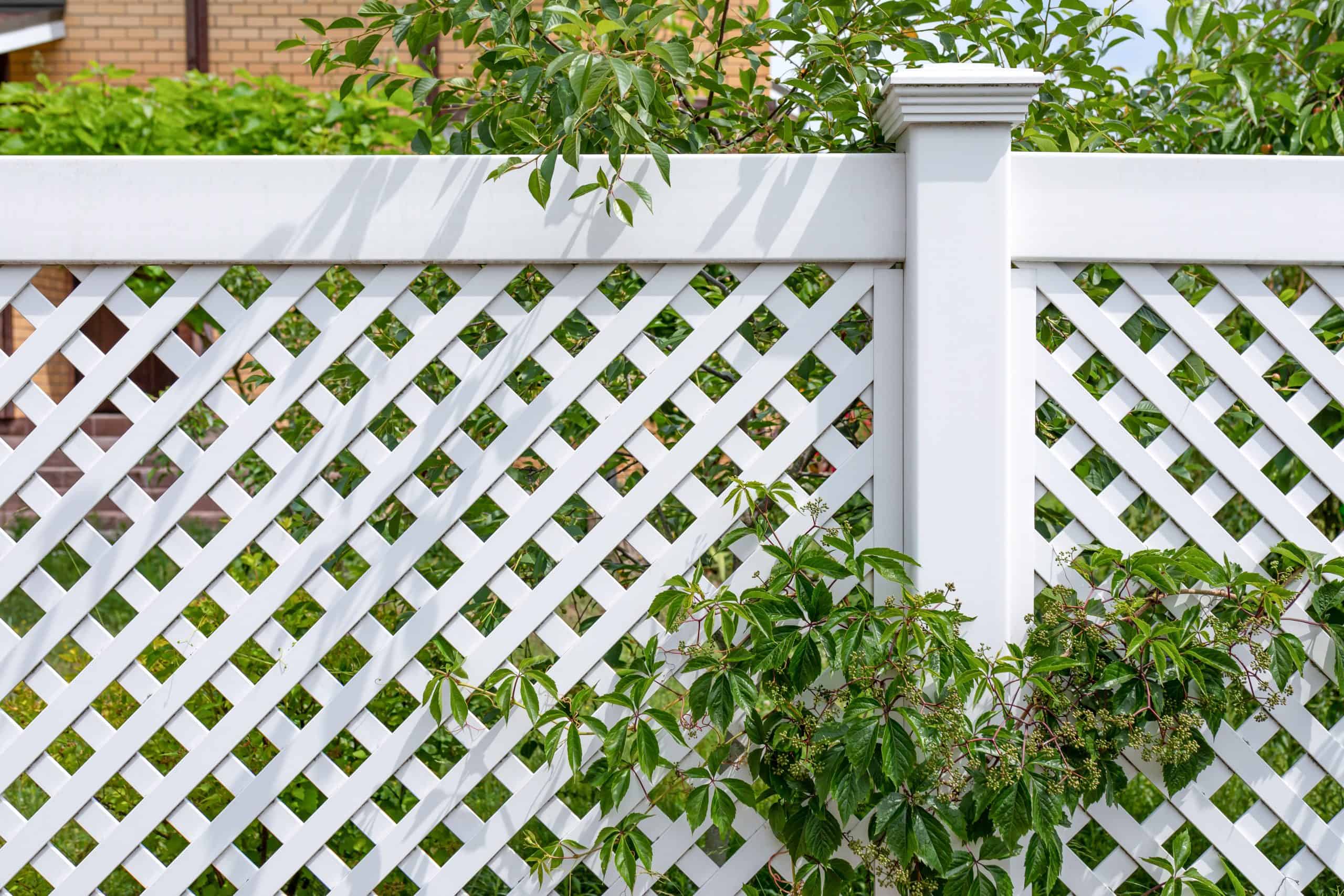
You can choose from different styles—flat-top, scalloped, or lattice-top—depending on your home’s aesthetic. White and tan are the most common colors because they resist heat absorption and stay cooler to the touch in Florida’s sun, but you have other options if you want something different.
For properties where you want some airflow but still need privacy, semi-privacy vinyl fencing uses offset panels that block most sightlines while allowing breeze through. That can be useful in Grand Island where summer heat makes fully enclosed yards feel stagnant. The style you choose depends on whether you prioritize complete privacy or some air circulation, but both options give you the low-maintenance durability vinyl provides.
Vinyl fences rarely need panel replacement unless they’ve been damaged by impact—like a fallen tree or vehicle collision. Unlike wood, vinyl doesn’t rot or warp from weather exposure, so age alone won’t ruin the panels.
Check for cracks, holes, or panels that have pulled away from posts. Those are signs of either impact damage or poor initial installation. If posts are leaning or panels are loose, that’s usually a post stability issue rather than a panel problem. In Grand Island’s sandy soil, posts that weren’t set deep enough can shift over time.
If your vinyl fence is faded, brittle, or cracking without obvious impact damage, you’re probably dealing with low-quality vinyl that wasn’t built for Florida’s UV exposure. That means replacement makes more sense than repair. Quality vinyl fence panels installation in Grand Island, FL should give you decades of service without brittleness or significant fading, so if you’re seeing those issues early, the original material likely wasn’t up to Florida standards.