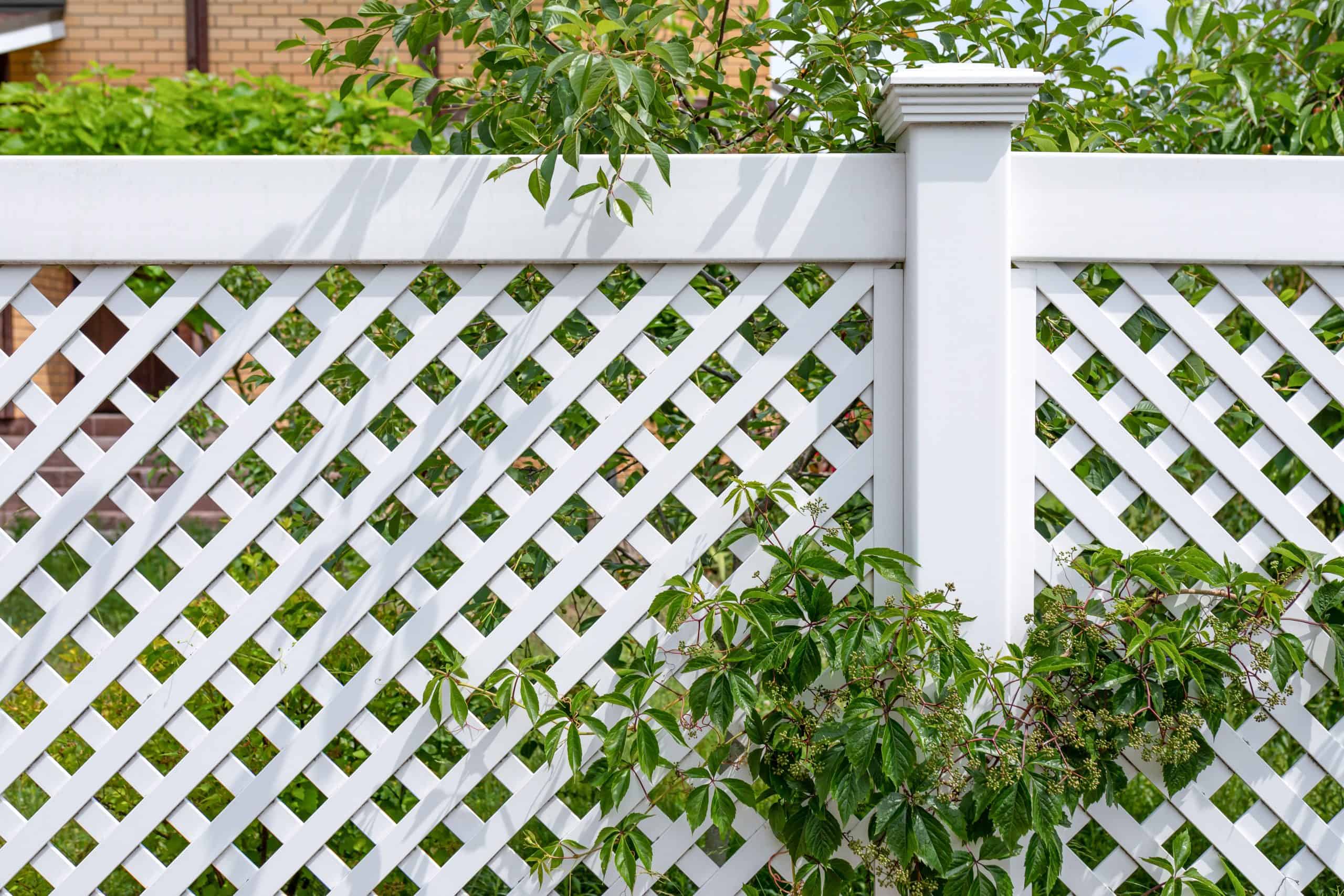
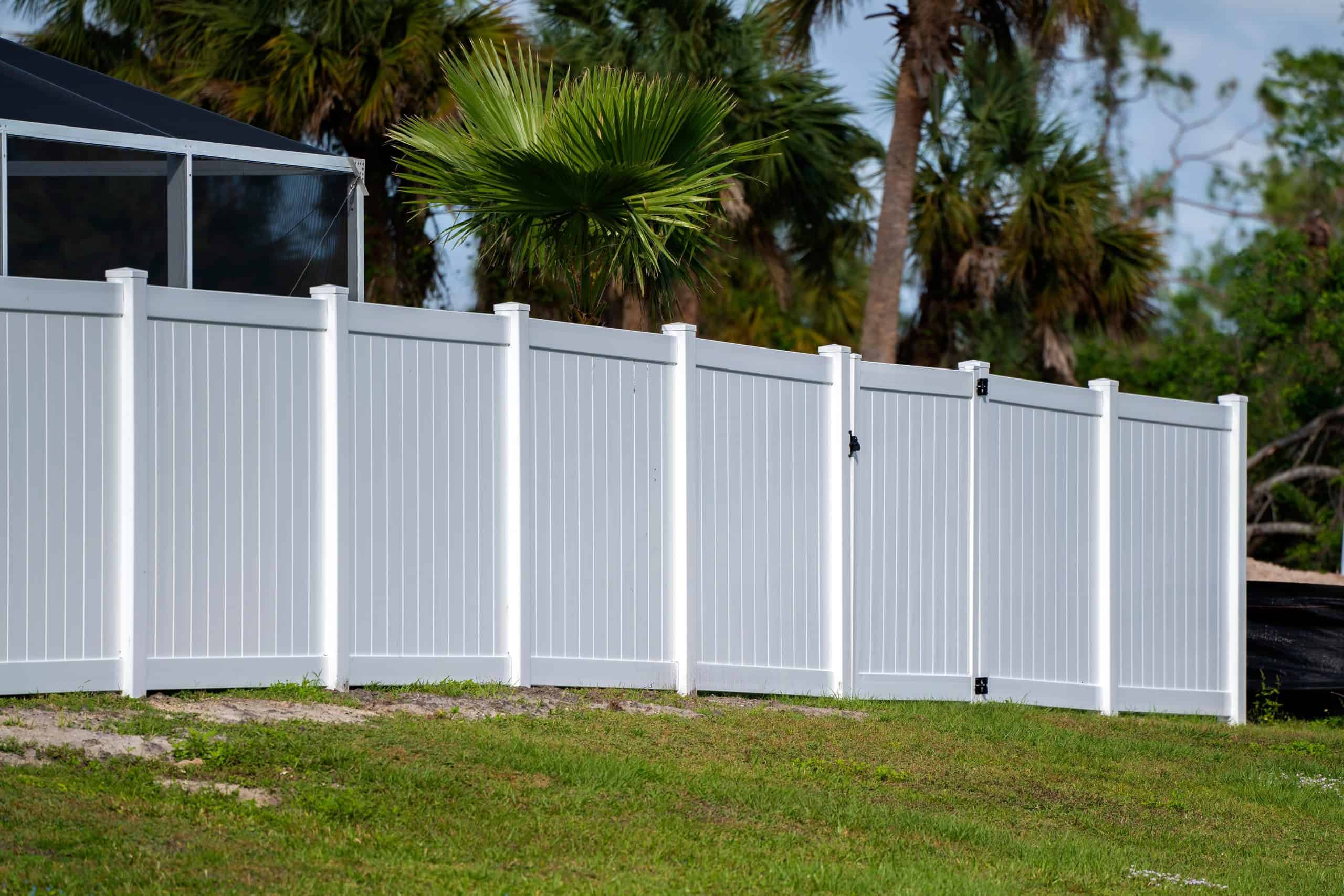
Your fence stays standing through storm season without the flex and fail you see with wood. Vinyl doesn’t rot when humidity sits at 80% for weeks. It doesn’t fade under direct sun or need resealing every other year.
You rinse it with a hose a few times a year. That’s the maintenance. No staining, no replacing warped boards, no scraping and repainting. The fence looks clean, stays straight, and holds up for 20 to 30 years without asking much from you.
If you have kids or dogs, vinyl privacy fencing gives you secure boundaries without gaps that shift over time. If you want curb appeal that doesn’t demand constant attention, vinyl delivers that too. It’s not flashy. It just works, year after year, in a climate that tears through wood.
We’ve been doing this since 1992. We started in Atlanta, moved to Central Florida in 2004, and we’ve been serving McIntosh, FL and the surrounding counties ever since. We’re licensed, bonded, and insured, which matters when you’re trusting someone to dig posts on your property and handle permits.
We don’t subcontract the work. Our crew installs your vinyl fence installation in McIntosh, FL from layout to cleanup. We use materials fabricated in the USA, and we price transparently so you know what you’re paying before we start.
McIntosh is a small community where property lines matter and homeowners expect work done right the first time. We get that. We’ve worked in rural Central Florida long enough to know what holds up and what doesn’t.

We start with a site visit to measure your property, check for underground utilities, and confirm what style and height works for your needs and local codes. McIntosh, FL has specific requirements, and we handle the permit process so you don’t have to track down county offices.
Once permits clear, we mark post locations and dig. Posts get set in concrete with proper depth and spacing to handle wind load during storms. Rails and panels go up next, with everything leveled and secured. Vinyl fencing is more flexible than wood, which actually helps during high winds, but it still needs to be installed correctly or you’ll have sagging sections within a year.
We clean up the site when we’re done. No leftover concrete chunks, no torn-up landscaping left for you to deal with. The fence is ready to use immediately. You’ll get a walkthrough so you know how everything’s built and what to expect long-term.

Ready to get started?
Vinyl fence installation cost in McIntosh, FL typically runs between $17 and $23 per linear foot for standard 4-foot fencing, with most projects averaging around $20 per foot. That includes materials, labor, and installation. Taller privacy fencing or custom styles will cost more, but you’ll know the number upfront.
You’re also getting materials that won’t need replacing in five years. Wood might be cheaper initially, but when you factor in staining every few years, board replacements, and the time you spend maintaining it, vinyl ends up being the better investment. It lasts 20 to 30 years with almost zero upkeep.
We also install aluminum fences in McIntosh, FL if you need something for pool code compliance or a more open look. Aluminum handles the climate just as well as vinyl and works better for certain applications. If you’re not sure which material fits your property, we’ll walk through the options during the site visit. McIntosh’s rural setting often means larger properties where a mix of fencing types makes sense, and we can design that layout to work within your budget.

Vinyl fencing lasts 20 to 30 years in Florida when it’s installed correctly. The material is built to handle UV exposure, high humidity, and temperature swings without degrading the way wood does.
Florida sun is brutal on fencing. Wood fades and dries out. Paint cracks. Vinyl has UV inhibitors built into the material, so it doesn’t fade or become brittle over time. Humidity and rain don’t cause rot or mold growth because vinyl isn’t organic. It won’t attract termites or carpenter ants, which are common problems with wood fencing in Central Florida.
The flexibility of vinyl also helps during storms. It bends slightly under wind pressure instead of snapping, which is why you see vinyl fences still standing after severe weather while wood fences are down. Proper installation matters here. Posts need to be set deep enough and spaced correctly, or even vinyl will fail.
You rinse it with a garden hose a few times a year. That’s it.
Dirt, pollen, and mildew can build up on the surface, especially in shaded areas where moisture sits. A hose and some water handle that. If you get stubborn stains, a soft brush and mild soap work fine. You’re not sealing, staining, or painting anything.
Wood fences need staining or sealing every two to three years to prevent moisture damage. You’re also inspecting for rot, replacing warped boards, and dealing with insect damage. Vinyl eliminates all of that. The color goes all the way through the material, so even if it gets scratched, you won’t see a different color underneath. There’s no finish to maintain because the material itself is the finish.
Yes, if it’s installed correctly. Vinyl is more flexible than wood, which actually makes it more stable during high winds.
Wood fencing is rigid. When wind hits it hard, something has to give, and that’s usually the boards or the posts. Vinyl flexes under pressure and then returns to its original position. That flexibility reduces the chance of catastrophic failure during a storm.
Installation is critical. Posts need to be set in concrete at the right depth based on fence height and local wind load requirements. In Central Florida, we’re designing for storms, not just normal weather. Spacing between posts also matters. Too far apart and the panels won’t have enough support. McIntosh, FL doesn’t see hurricanes as often as coastal areas, but you still get severe thunderstorms with strong winds, and your fence needs to handle that without falling over.
Vinyl costs more upfront. You’ll pay roughly $17 to $23 per linear foot for vinyl fence installation in McIntosh, FL versus $10 to $15 per foot for wood.
But wood isn’t a one-time cost. You’re staining or sealing it every few years at a few hundred dollars per project. You’re replacing boards that warp or rot. You’re spending weekends maintaining it. Over 20 years, wood ends up costing more in both money and time.
Vinyl is a single expense. You install it and you’re done. No ongoing maintenance costs, no replacement boards, no repainting. If you’re planning to stay in your home long-term, vinyl pays for itself. If you’re selling within a few years, buyers see vinyl as an upgrade because they know they won’t have to deal with maintenance. It adds value either way.
Yes, most fence installations in McIntosh, FL require a permit, especially if the fence is over a certain height or near property lines.
Marion County has specific codes regarding fence height, setback from property lines, and placement near easements or right-of-ways. If you install without a permit and the county finds out, you could be fined or required to remove the fence entirely. That’s an expensive mistake.
We handle the permit process as part of the installation. We know what the county requires, we submit the paperwork, and we make sure the installation meets code. You don’t have to visit county offices or figure out zoning regulations. The permit also protects you if there’s ever a dispute with a neighbor about property lines, because it shows the fence was installed legally and inspected.
Vinyl is solid and works best for privacy. Aluminum is open and works better for visibility or pool code requirements.
Vinyl fences in McIntosh, FL are typically privacy-style with panels that block sightlines completely. That’s ideal if you want to create a private backyard space, block noise, or keep dogs contained. Vinyl is also available in semi-privacy or picket styles, but most people choose it for full privacy.
Aluminum fences are vertical bars with spacing between them. You can see through them, which makes them better for pool enclosures where code requires visibility, or for front yards where you want a boundary without blocking the view. Aluminum also handles ground movement better than vinyl because each picket moves independently. If you have areas where the ground shifts seasonally, aluminum is more forgiving.
Both materials last decades in Florida’s climate and need almost no maintenance. The choice comes down to what you need the fence to do. Privacy and containment? Vinyl. Visibility and code compliance? Aluminum.