Summary:
Central Florida is one of the hardest places in the country to own a fence. Between the humidity that never really lets up, the UV exposure that bleaches and cracks anything organic, hurricane season arriving like clockwork every June, and the termites quietly working through anything made of wood — most fencing materials are fighting a losing battle before the concrete even sets. Aluminum fencing is the exception. It doesn’t rust, doesn’t rot, doesn’t need annual staining, and doesn’t buckle under the pressure of a Florida summer. If you’re weighing your options for a new fence in Central Florida, here’s what you actually need to know.
Why Aluminum Fences Hold Up Better in Central Florida's Climate
The short answer is that aluminum doesn’t react the way other materials do to moisture, heat, or salt air. Wood absorbs humidity and eventually warps, rots, or becomes a termite buffet. Wrought iron and steel oxidize — that’s rust — and in Central Florida where the air is thick with moisture eight months out of the year, that process moves fast. Aluminum forms its own protective oxide layer naturally, and when we add a quality powder-coated finish on top of that, you’re looking at a fence that can realistically last 50 years or more with almost no intervention.
That’s not a marketing claim — it’s material science. And for homeowners in Central Florida who’ve already replaced one fence and don’t want to do it again, that lifespan matters.
Does Aluminum Fence Hold Up Against Central Florida's Humidity and Salt Air?
This is one of the most common questions we hear, and the answer is straightforward: yes, aluminum handles Central Florida’s humidity better than virtually any other fencing material available at a comparable price point.
Rust is iron oxide. It only forms on ferrous metals — iron, steel, wrought iron. Aluminum doesn’t contain iron, so it physically cannot rust. What it does form is aluminum oxide, which actually acts as a barrier that protects the underlying metal from further exposure. That’s why raw aluminum left outside doesn’t deteriorate the way a steel fence would.
Powder coating takes that protection further. A quality powder-coated finish bonds to the aluminum at a molecular level — it’s not paint, and it doesn’t peel or chip the way paint does. The best residential coatings are tested to AAMA 2604 standards, which means they’re rated for Florida exposure conditions. Commercial-grade coatings go even further, meeting AAMA 2605 specifications with a 10-year guarantee. Some manufacturers test their finishes to the 10,000-hour salt spray standard under ASTM B-117 — three times what the standard residential specification requires.
For homeowners in Brevard County near the coast, or in Volusia County communities close to Daytona Beach, this matters even more. Salt air is corrosive, and it accelerates the deterioration of iron, steel, and even some vinyl products over time. Aluminum with a proper powder coat finish is genuinely the right call for anything within a reasonable distance of the Atlantic.
Inland communities throughout Central Florida like Oviedo, Winter Garden, Clermont, and Lake Nona don’t have the salt air variable, but they still deal with relentless humidity and UV exposure that fades and degrades lesser materials. Aluminum handles both without complaint.
How Does Aluminum Fence Perform During Hurricane Season in Central Florida?
Hurricane Ian made landfall in September 2022 and cut a path through Central Florida that left a lot of fences on the ground. Wood privacy fences, in particular, acted like sails — the solid panels caught wind load and the posts gave way. Chain-link fares better than wood in high winds, but it’s not exactly a selling point aesthetically or for HOA compliance. Aluminum performs differently.
The open picket design that’s standard in aluminum fencing actually works in its favor during wind events. Wind passes through the panels rather than pushing against a solid surface, which dramatically reduces the load on the posts. That’s one of the structural reasons aluminum picket fencing has become the dominant choice in Central Florida communities that deal with tropical weather regularly.
Installation quality makes a significant difference. Posts need to be set deep enough and anchored properly in concrete to handle sustained wind loads. This is where Central Florida’s sandy soil becomes a real variable. Much of Orange, Seminole, Lake, and Osceola counties sit on loose, porous soil with a high water table — conditions that require a contractor who understands local ground conditions, not one applying a standardized national installation template. Post depth, footing diameter, and concrete mix all matter more here than they would in denser soil markets.
Premium engineered aluminum fence systems have been independently tested to withstand sustained winds of 80 to 90+ miles per hour. Properly installed by an experienced local contractor, a quality aluminum fence gives you a real fighting chance when the next storm rolls through — and in Central Florida, there will always be a next storm.
Aluminum Pool Fencing and Florida's Barrier Requirements
If you have a pool — or you’re installing one — this section is worth reading carefully. Florida law requires a compliant barrier around any residential swimming pool, and the requirements are specific. Under Florida Statute 515.29, the barrier must be at least 48 inches high measured from the exterior ground level, with no gaps or openings larger than four inches between fence components. Gates must be self-closing and self-latching, with the latch positioned on the pool side of the gate.
Aluminum picket fencing is one of the most widely installed pool barrier solutions in Central Florida because it meets all of these requirements while maintaining open sight lines to the water — something a solid privacy fence can’t offer. Being able to see your kids in the pool from across the yard isn’t a minor detail.
What Does Florida Require for Pool Fence Installation?
The requirements under Florida Statute 515.29 and the Florida Building Code aren’t complicated, but they’re precise, and getting them wrong means a failed inspection and the cost of corrections before you can close your permit. The 48-inch minimum height is the most commonly cited requirement, but the gate hardware is where a lot of installations run into trouble.
Self-closing hinges need to be tensioned correctly so the gate swings shut every single time — not most of the time, every time. The self-latching mechanism must engage automatically without any manual action from the person passing through. And the latch needs to be on the pool side of the gate, positioned high enough that a small child cannot reach it from the exterior. These aren’t suggestions; they’re code requirements that get checked at inspection.
Pool barrier installations in Florida also require a Pool Barrier Affidavit signed by both the contractor and the homeowner confirming compliance with the building code before the permit can close. We handle this as a routine part of the process — not something you’re figuring out together at the end.
For homeowners in Central Florida communities like Lake Nona, Celebration, or the newer developments in Horizon West and St. Cloud, there’s an additional layer: HOA architectural guidelines. Many of these communities have specific requirements for fence style, color, and height that go beyond the state code minimums. Black aluminum picket fencing at a specific rail height is the approved configuration in a large number of Central Florida HOAs — which is part of why aluminum has become so dominant in these markets. We know the local HOA landscape and can tell you what’s likely to pass architectural review before you submit anything, which saves time and avoids the cost of changes after installation.
Aluminum picket spacing of 3.5 inches between pickets is one of the most common compliant configurations for pool barriers in Florida, and it works aesthetically in virtually every residential setting. The open design doesn’t feel like a cage, it doesn’t block airflow or natural light, and it holds up to the pool environment — chlorine splash, humidity, and all — without corroding or degrading the way iron or steel would.
Aluminum Fence Styles and What Works Best for Central Florida Homes
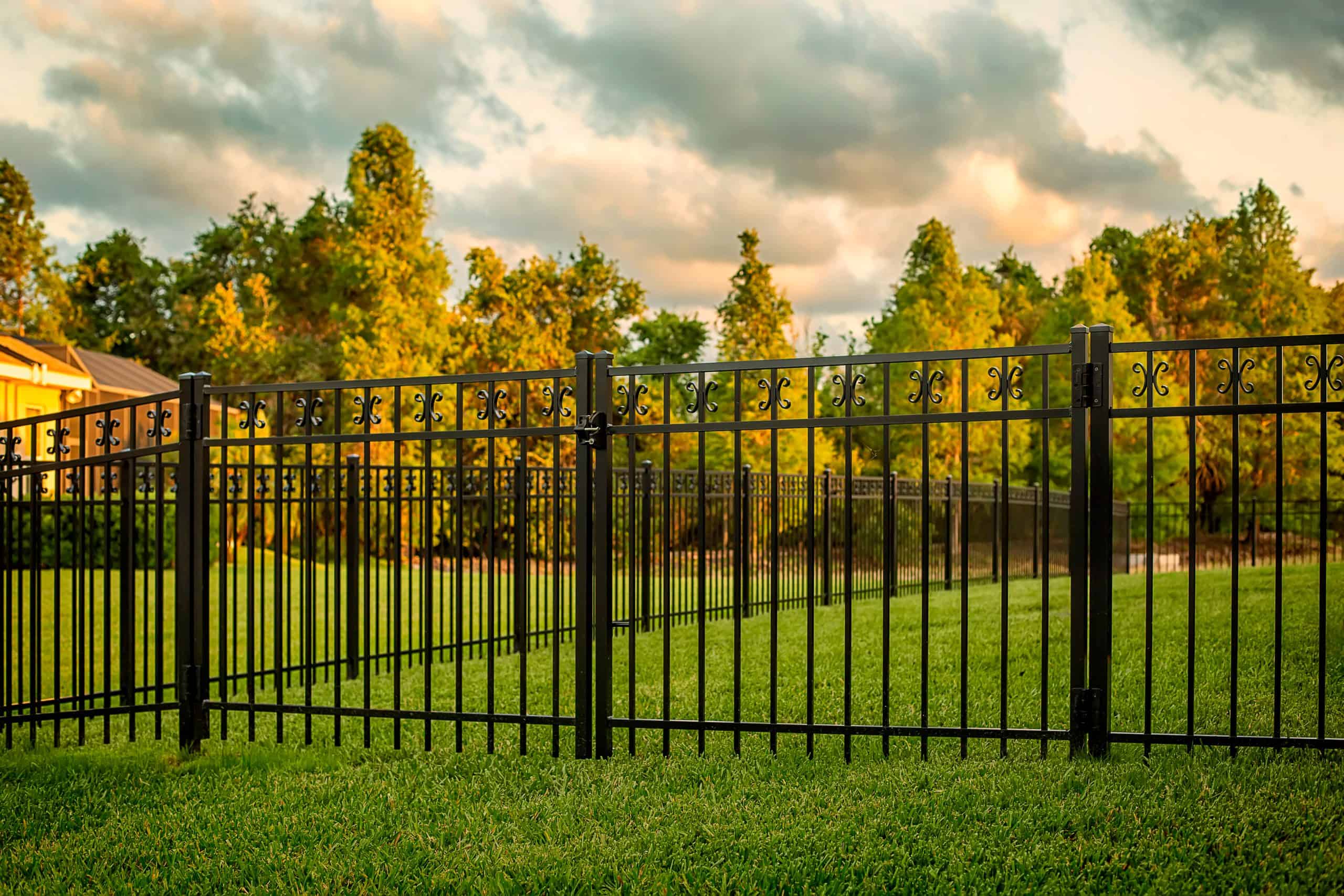
One of the more common misconceptions about aluminum fencing is that it only comes in one basic picket style. That’s not remotely the case. Aluminum fencing is available in flat-top configurations, spear-top designs, close-space picket for added privacy, decorative ornamental styles with scrollwork and finials, and horizontal slat options that have become increasingly popular in newer construction. Colors typically include black, bronze, and white, with black being the most widely specified in HOA communities across Central Florida.
Flat-top aluminum is clean and modern — it works well with the Mediterranean and contemporary architectural styles common throughout Orange and Seminole counties. Spear-top and ornamental designs add a more traditional, estate-like character that fits homes in Windermere, Dr. Phillips, and similar established neighborhoods where curb appeal carries real weight. Close-space picket reduces visibility between pickets without creating a fully solid barrier, which is a practical middle ground for homeowners who want more privacy without losing the code-compliant sight lines required for pool areas.
The style you choose also affects your total cost. Standard residential-grade aluminum is appropriate for most backyard enclosures and pool barriers. Commercial-grade aluminum — heavier gauge, more robust hardware — is better suited for high-traffic gates, commercial properties, or coastal locations where the material faces more stress over time. Most Central Florida homeowners doing a standard backyard enclosure of around 250 linear feet will land somewhere between $7,500 and $10,000 installed, depending on style, grade, and gate configuration. Pool enclosures, which typically run 100 to 150 linear feet, often fall in the $2,500 to $5,000 range depending on the same variables.
These are real numbers based on current market conditions in the Orlando area — not ballpark estimates pulled from a national average. The actual cost of your project depends on your specific yard, your county’s permit fees, the style you select, and how many gate openings you need. Getting a quote from a contractor who knows the local market is the only way to get an accurate number.
Choosing the Right Aluminum Fence Contractor in Central Florida
The material is only part of the equation. A quality aluminum fence installed correctly by a licensed, experienced contractor will outlast one installed cheaply by years — sometimes decades. In Central Florida’s soil conditions, with its specific code requirements and HOA landscape, local experience genuinely matters.
Look for a contractor who is licensed, bonded, and insured, pulls permits as a standard part of the process, and can speak specifically to your county’s requirements and your community’s HOA guidelines. Warranties matter too — both on the materials and on the workmanship.
We’ve been installing aluminum fences across Central Florida since 2004, working in Lake, Orange, Seminole, Brevard, Volusia, Osceola, Polk, Sumter, and Marion counties. If you’re ready to get a straight answer on what your project would cost and what the process looks like, reach out to Mossy Oak Fence LLC and we’ll walk you through it.