Summary:
If you’re weighing vinyl fences against wood fences for your Central Florida home, you’re not alone — and the answer isn’t as simple as “one is better than the other.” It depends on your budget, your timeline, your neighborhood, and honestly, how much time you want to spend maintaining a fence over the next two decades. What we can tell you is that Central Florida’s climate makes this decision more consequential than it would be almost anywhere else in the country. The heat, the humidity, the storms — they all factor in. Let’s walk through what actually matters so you can make a call you won’t regret.
Vinyl vs. Wood Fence: How the Two Materials Actually Compare
At face value, wood fencing costs less upfront — typically $20 to $50 per linear foot installed, compared to $30 to $60 for vinyl. That gap is real, and for some budgets, it matters. But the upfront number is only part of the story.
Vinyl doesn’t rot, warp, splinter, or absorb moisture. It doesn’t need to be stained, sealed, or painted. A quality vinyl fence installed today should still look the same in 25 to 30 years with nothing more than an occasional rinse. Wood, on the other hand, needs to be resealed or stained every two to three years — and in Central Florida’s climate, skipping that maintenance cycle accelerates the damage significantly.
The comparison that most people don’t make is the 20-year total cost. When you factor in recurring maintenance, board replacements, and the likelihood of a full replacement before the fence hits its natural end of life, vinyl usually wins on value even for buyers who started out focused on the lower sticker price.
How Central Florida's Heat and Humidity Affect Wood Fences Over Time
Central Florida averages around 78% relative humidity — one of the highest in the continental U.S. That’s not just uncomfortable in August. It’s genuinely destructive to wood over time. Wood is porous. It absorbs moisture, swells, contracts, and eventually begins to rot from the inside out, often starting at the post base where the wood meets the soil. In Central Florida’s sandy, moisture-retaining ground, that process moves faster than most homeowners expect.
A wood fence that looks solid in year three can start showing real problems by year five or six without consistent maintenance. Posts lean. Boards warp and pull away from rails. Mold and mildew start creeping across the surface, especially on the shaded side of the fence. By the time most homeowners notice, the damage has already spread beyond a simple repair.
Termites add another layer of risk that’s easy to underestimate. Central Florida has some of the highest termite pressure in the country, and even pressure-treated wood isn’t immune over time. Subterranean termites work quietly and can compromise a fence’s structural integrity before you see any visible surface damage. Vinyl offers zero nutritional value to termites or any other pest — there’s simply nothing there for them.
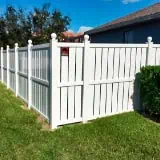
The sun is the third factor. Central Florida gets over 230 sunny days a year, and prolonged UV exposure causes wood to gray, dry out, and crack without regular treatment. Quality vinyl fencing is manufactured with titanium dioxide UV inhibitors that resist this kind of degradation for decades. It won’t gray, it won’t splinter, and it won’t become a liability in your backyard.
None of this means wood fences are a bad choice everywhere. But in Central Florida’s specific climate, the maintenance burden is real and ongoing — and it compounds every year you let it slide.
Can a Vinyl Fence Actually Handle Central Florida Wind and Storm Season?
This is one of the most common questions we hear, and it’s a fair one. Vinyl fencing has a reputation in some circles for being fragile — and early-generation products earned that reputation. But modern vinyl, installed correctly, is a different product entirely.
A properly installed vinyl fence with posts set in concrete footings can withstand winds up to 100 mph. The key phrase there is “installed correctly.” In Central Florida’s sandy soil, post depth and concrete setting are everything. Posts that aren’t anchored deep enough will shift or lean regardless of what material they’re made from. This is one of the reasons installation experience matters as much as material quality — we’ve been setting fence posts in Lake County, Osceola County, Orange County, and Seminole County for over 20 years, and we know exactly how deep to go and how much concrete each post needs to hold through a tropical system.
Wood fences, by contrast, are only as strong as their weakest post. A fence that’s been exposed to Central Florida’s humidity for several years often has posts that look fine on the surface but have begun to rot below the soil line. When a storm brings 70 or 80 mph gusts — which happens regularly across Central Florida — those compromised posts are the first thing to go. We’ve seen it after every significant storm season, and it’s almost always the wood fences that come down first.
For homeowners who have already replaced a storm-damaged fence once, this is usually the moment they start asking about vinyl. The upgrade makes sense: you’re already spending the money, and you’d rather spend it once. Solid vinyl privacy panels do act as wind sails if the installation isn’t right, which is why the contractor you choose matters just as much as the material itself. Done right, vinyl holds up. Done wrong, nothing holds up.
What Vinyl and Wood Fencing Actually Cost in Central Florida
Pricing varies based on fence height, style, linear footage, and site conditions, but here’s a realistic range for Central Florida installations. Wood fencing typically runs $20 to $50 per linear foot installed, putting a 200-linear-foot fence somewhere between $4,000 and $10,000. Vinyl runs $30 to $60 per linear foot installed, or roughly $6,000 to $12,000 for the same footage.
That gap looks significant on day one. But wood fencing in Central Florida requires staining or sealing every two to three years — a project that costs $200 to $500 in materials alone, plus your time or the cost of hiring it out. Add in the occasional board replacement, a leaning post here and there, and the reality that most wood fences in this climate need full replacement within 15 to 20 years, and the math starts to shift. Vinyl’s annual maintenance cost rarely exceeds a dollar per linear foot — and most years, it’s closer to zero.
HOA Fence Rules in Central Florida: What You Need to Know Before You Buy
If you live in an HOA-governed community — and a large portion of Central Florida homeowners do — the material decision isn’t entirely yours to make. Communities like The Villages in Sumter County, Celebration in Osceola County, and the master-planned suburbs spreading across Lake and Orange counties all have architectural review processes that govern fence materials, colors, heights, and styles. Getting this wrong means tearing out a fence you just paid for.
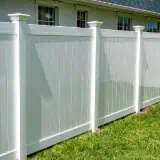
Vinyl fencing tends to fare well in HOA reviews for a straightforward reason: it maintains a consistent, clean appearance year after year. A wood fence that’s been graying and warping for three years is an HOA complaint waiting to happen. A white or tan vinyl fence that looks the same as it did on installation day is not. Many HOAs across Central Florida specifically permit or prefer vinyl because it reduces the likelihood of maintenance violations down the road.
The process itself — submitting architectural review requests, waiting for approval, meeting height and setback requirements — takes time and requires documentation. We handle that paperwork as part of our fence installation process, which matters more than most buyers realize until they’re in the middle of it. Knowing what Orange County or Seminole County HOAs typically approve, what styles are most likely to sail through review versus get flagged, and how to document the request correctly — that’s the kind of local knowledge that comes from doing this work in Central Florida for over 20 years.
If you’re not sure whether your community has fence restrictions, that’s the first question to answer before you request a single quote. We can help you figure that out before any money changes hands.
Does Vinyl Fencing Look as Good as Wood? The Honest Answer
The most common reason buyers lean toward wood over vinyl isn’t cost — it’s aesthetics. Wood looks natural. It has texture, warmth, and character that early vinyl products genuinely couldn’t replicate. If that’s your hesitation, it’s a reasonable one.
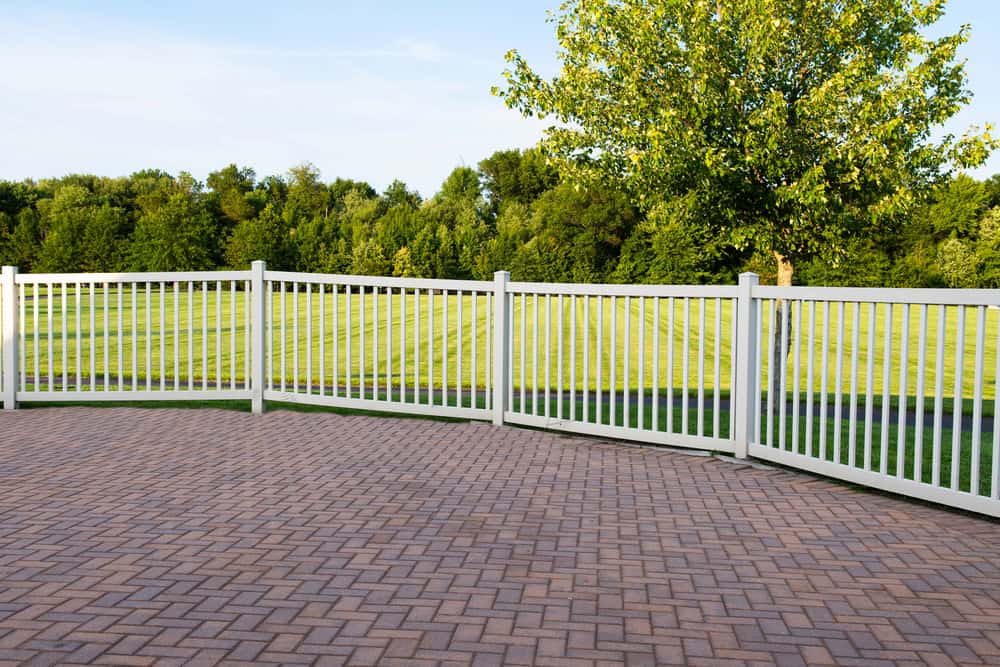
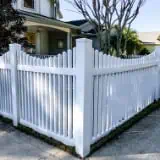
But modern vinyl has closed that gap considerably. Wood-grain textured vinyl panels mimic the look of real wood closely enough that the difference isn’t obvious from the street. They come in multiple colors — white, tan, gray, and others — and in a range of styles from classic picket to full privacy to semi-private designs that let air and light through while still defining your space. If you’ve only ever seen the bright white vinyl fences from 15 years ago, it’s worth looking at what’s available now before you write it off.
That said, wood still wins on pure aesthetics for some buyers, and that’s a legitimate preference. A well-maintained cedar fence has a look that vinyl doesn’t perfectly replicate, and if you’re committed to that appearance and willing to put in the maintenance work, wood is a valid choice. The honest answer is that vinyl has gotten much better, and for buyers who want something close to the look of wood without the upkeep, wood-grain vinyl is worth a serious look.
What we’d caution against is choosing wood primarily because you think vinyl looks cheap — because that assumption is based on products that no longer represent what’s available. Come see samples, look at completed projects in your area, and make the call with current information rather than a mental image that’s a decade out of date. The visual difference is smaller than most people expect, and the maintenance difference is larger.
Which Fence Is the Right Choice for Your Central Florida Property?
For most Central Florida homeowners, vinyl fencing is the more practical long-term investment — especially when you account for the heat, humidity, termite pressure, and storm seasons that come with living here. The upfront cost is higher, but the 20-year math usually favors vinyl, and the maintenance burden is dramatically lower.
Wood fencing still makes sense for buyers with tighter upfront budgets, strong aesthetic preferences for natural materials, or properties where the installation context makes wood the better fit. It’s not a bad choice — it just requires more from you over time.
The most important variable in either case is the quality of the installation. The right material installed poorly will fail. The right material installed correctly, with properly set posts and quality components, will hold up through whatever Central Florida throws at it.
If you’re ready to get a clear picture of what makes sense for your specific property — your yard, your HOA, your budget, your timeline — reach out to us at Mossy Oak Fence LLC. We’ve been doing fence installation work across nine counties in Central Florida since 2004, and we’ll give you a straight answer before we ever ask you to sign anything.