Your fence should make life easier, not add another item to your weekend to-do list. That’s exactly what vinyl fencing does for homeowners in Flamingo, FL.
You’re looking at a fence that doesn’t need painting. Ever. No sealing, no staining, no rust treatment. A quick rinse with your garden hose a few times a year is all it takes to keep it looking sharp.
The real payoff shows up during storm season. Vinyl fence panels installation done right means flexibility when winds pick up—these fences bend without breaking, certified to withstand up to 130 mph winds. Wood splinters and cracks. Metal rusts in the salt air. Vinyl keeps standing.
And unlike wood that warps in humidity or fades under that relentless Florida sun, vinyl maintains its appearance year after year. The UV resistance is built into the material itself, so the color stays consistent. You won’t see that bleached-out, weathered look that happens with other materials.
The upfront cost runs higher than wood, but you’re done spending after installation. No repairs from rot. No replacement boards. No repainting every few years. That’s where the real value sits—in what you don’t have to do.
We’ve been handling residential vinyl fence installation across Central Florida since 2004, with roots going back to 1992 in the Atlanta market. That’s over two decades of understanding what works in climates like Flamingo’s—and what doesn’t.
We’re not new to Florida’s building codes, permit requirements, or the engineering specs needed for high-wind zones. Flamingo sits in an area where fences need to meet strict wind load standards, often 115 mph or higher. We build to those specs every time because cutting corners isn’t an option when the next storm rolls through.
Our coverage spans Lake, Orange, Seminole, Brevard, Volusia, Osceola, Polk, Sumter, and Marion counties. We use the same top-grade vinyl materials across every project, backed by industry-leading warranties. You get transparent pricing upfront, no surprise charges later, and a team that shows up when we say we will.

The process starts with a site visit. We measure your property, check for any easement issues, and talk through what you’re trying to accomplish—privacy, security, curb appeal, or all three. This is also when we confirm local permit requirements specific to Flamingo, FL.
Once you approve the estimate, we handle the permit paperwork. Many homeowners don’t realize how specific local codes can be about fence height, setback distances, and placement near property lines. We navigate that so you don’t have to deal with fines or forced removals later.
Installation day involves setting posts in concrete, ensuring they’re level and properly spaced. The vinyl fence panels installation comes next, with each panel secured to handle wind pressure. We’re not just snapping pieces together—the attachment points and post depth matter significantly in coastal areas like Flamingo where wind loads are higher.
The timeline depends on your property size and fence length, but most residential vinyl fence installation projects wrap up in a few days. We clean up completely when we’re done. No leftover materials, no mess in your yard.
After installation, you’ll get care instructions, though there’s not much to it. Rinse it off occasionally. That’s about it. If you ever have issues covered under warranty, we’re a phone call away.

Ready to get started?
Every vinyl fence installation in Flamingo, FL includes site assessment, permit acquisition, professional installation, and cleanup. You’re not paying for the fence and then getting nickel-and-dimed for the rest.
The materials we use are commercial-grade vinyl composites—up to five times stronger than wood. These aren’t the thin, consumer-grade panels you’ll find at big-box stores for $15-20 per linear foot. Those products might look similar at first, but they’re thinner, less durable, and won’t hold up to Florida’s climate the same way.
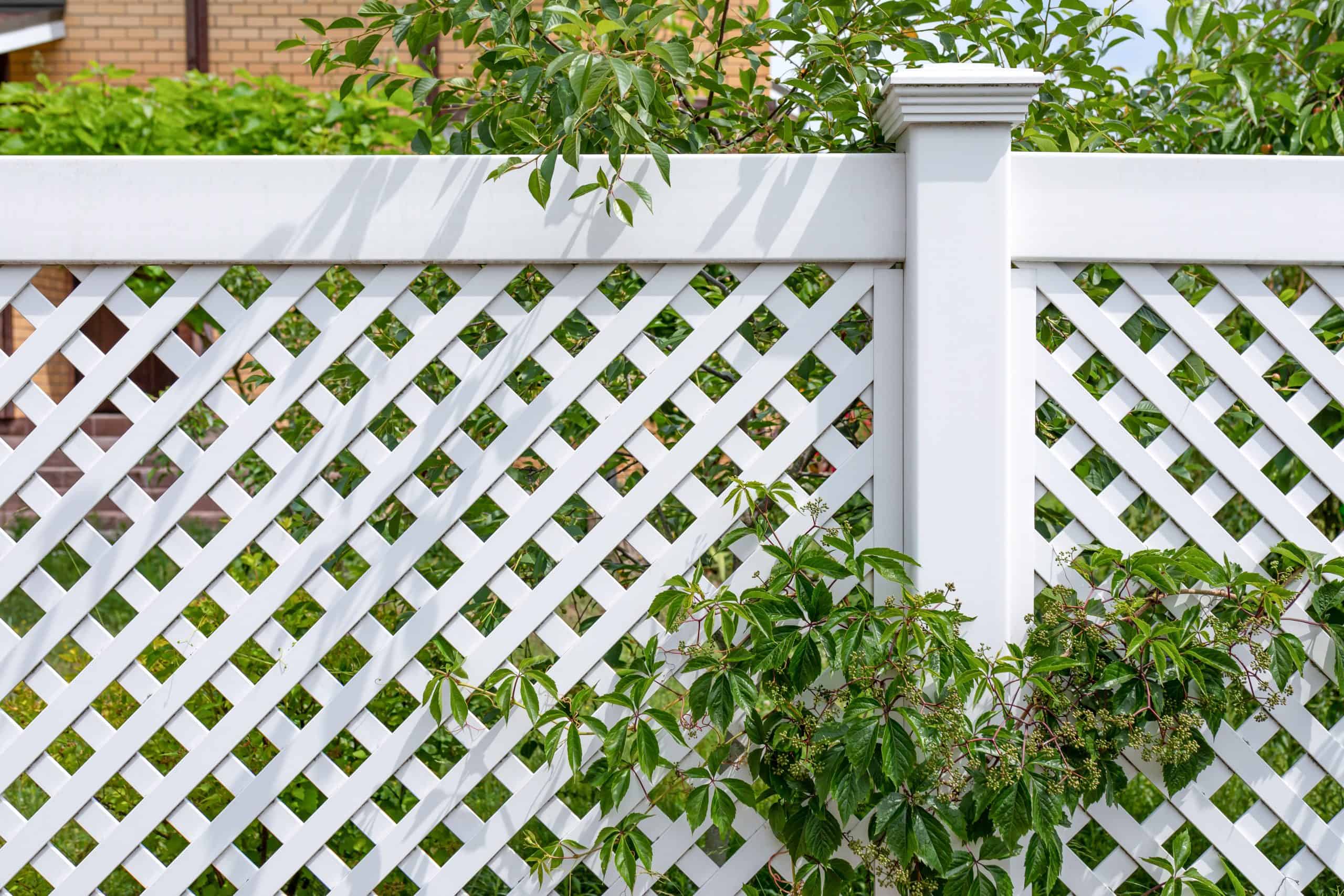
We offer multiple styles: privacy fences for complete seclusion, shadowbox designs for airflow with privacy, and decorative options that add curb appeal. Heights typically range from four to six feet, depending on your needs and local code restrictions. Colors go beyond white—tan, gray, and other options are available to match your home’s exterior.
In Flamingo specifically, salt air is a consideration. Vinyl doesn’t corrode like metal or degrade like wood in these conditions. It’s why vinyl fencing has become the go-to choice for coastal Florida properties.
The vinyl fence installation cost in Flamingo typically runs between $23-40 per linear foot for a complete installation, depending on height and style. That includes labor, materials, and permits. We give you the full number upfront so you can make an informed decision without guessing what the final bill will be.

You’re looking at 20 to 30 years, sometimes longer with quality materials and proper installation. The key factors are UV resistance and how well the fence is anchored to handle wind.
Cheap vinyl breaks down faster under Florida sun. The UV inhibitors in commercial-grade vinyl are what keep the material from becoming brittle or faded. We use vinyl with built-in UV protection that’s designed specifically for climates like Flamingo’s—intense sun, high humidity, salt exposure.
The installation quality matters just as much as the material. Posts need to be set deep enough and in concrete. In Flamingo, that usually means going deeper than standard because of wind load requirements. If posts aren’t secure, even the best vinyl won’t perform when a storm hits. We follow engineering specs that account for local wind zones, which is why our installations hold up year after year.
Vinyl costs more upfront—usually $23-40 per linear foot installed versus $15-25 for wood in the Flamingo area. But wood doesn’t stop costing you money after installation.
Wood needs staining or painting every two to three years in Florida. That’s materials plus labor if you’re hiring it out, or your entire weekend if you’re doing it yourself. Then there’s rot repair, board replacement from warping, and eventual full replacement after 10-15 years in humid climates.
Vinyl’s maintenance cost is essentially zero. No painting, no sealing, no rot repairs. Over a 20-year period, you’ll spend significantly less on vinyl when you factor in what you’re not paying for upkeep. The math shifts even more in vinyl’s favor if you value your time—those weekends you’re not maintaining a fence add up.
Yes, when they’re engineered and installed correctly. The flexibility of vinyl is actually an advantage in high winds—it bends rather than snapping like wood or buckling like some metal fences.
Our vinyl fence panels installation uses materials certified to withstand winds up to 130 mph. But certification alone doesn’t guarantee performance. The installation has to meet the engineering specs for your specific wind zone. In Flamingo, that means proper post depth, concrete footings, and reinforced attachment points.
Solid vinyl panels do catch more wind than styles with gaps, which is something to consider. Shadowbox or semi-privacy designs allow some wind to pass through, reducing overall pressure on the fence line. We can walk you through which style makes sense for your property based on exposure and local wind patterns. The goal is a fence that’s still standing after the storm, not one you’re rebuilding every few years.
Almost certainly, yes. Flamingo falls under Miami-Dade County regulations, which have specific requirements for fence permits, especially regarding height, setback from property lines, and wind load engineering.
Most residential fences over a certain height require a permit, and you’ll need a survey to confirm property boundaries. If your fence is going near an easement or right-of-way, you’ll need additional approvals. Skipping the permit process can result in fines and being forced to remove the fence entirely.
We handle permit applications as part of our vinyl fence installation service. We know what documentation Miami-Dade County requires, what the typical approval timeline looks like, and how to get engineering stamps when needed for wind certification. It’s one less headache for you, and it ensures everything’s done legally so there are no issues down the road if you sell your property.
Almost none. Rinse it with a garden hose a few times a year to remove dirt, pollen, or salt residue. That’s genuinely the extent of regular maintenance for vinyl fences in Flamingo, FL.
If you get mold or mildew in shaded areas—which can happen in Florida’s humidity—a soft brush with soapy water takes care of it. No special cleaners needed. The vinyl won’t absorb moisture like wood, so you’re not dealing with rot or structural degradation.
You never paint it. You never seal it. You never treat it for insects because they can’t damage vinyl the way they destroy wood. If a panel ever gets damaged from impact—a fallen branch, lawn equipment, whatever—individual panels can be replaced without redoing the entire fence. But that’s rare. Most homeowners go years without touching their vinyl fence beyond an occasional rinse, which is exactly the point of choosing this material.
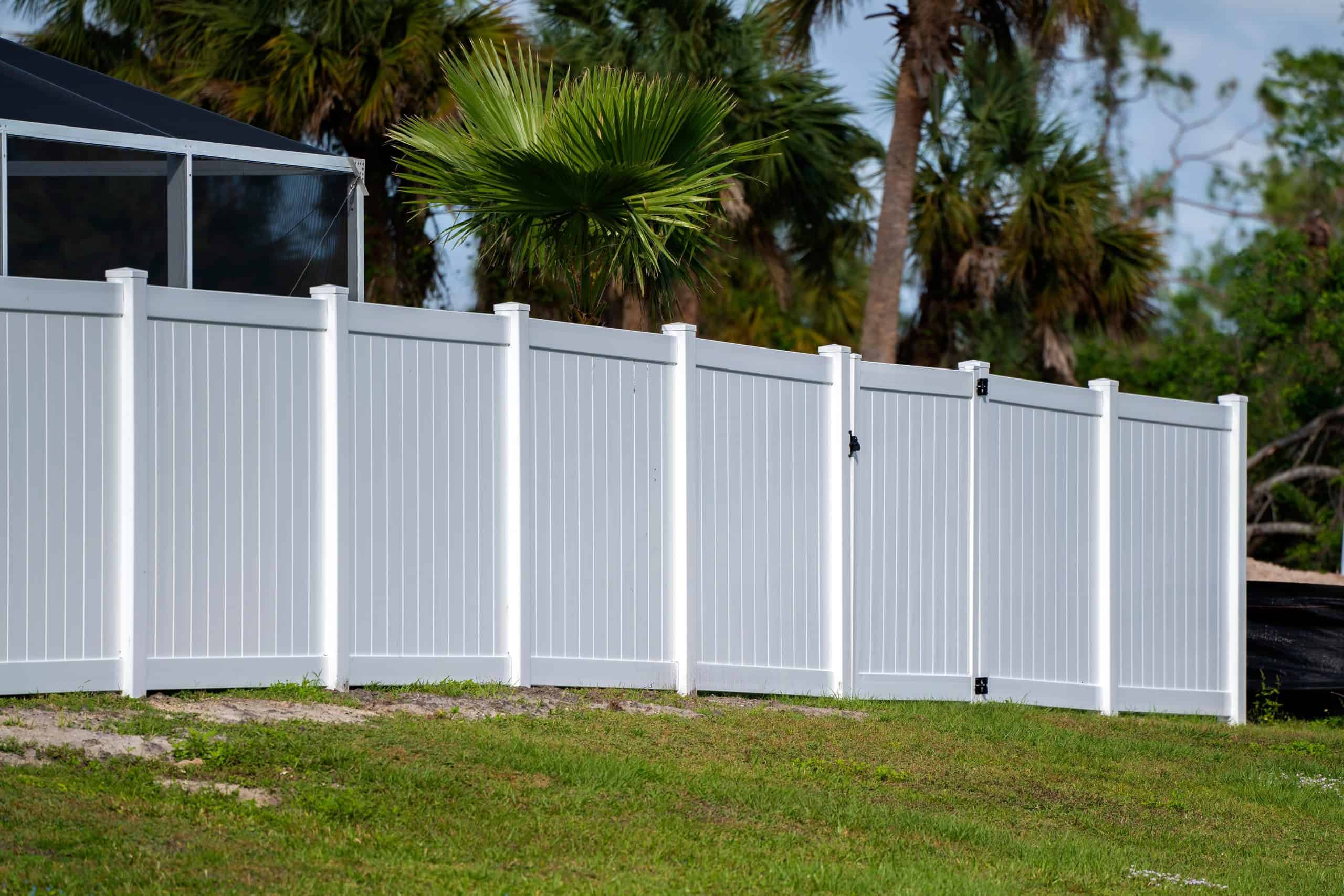
Full privacy panels with tongue-and-groove design give you complete seclusion. The panels interlock with no gaps, blocking sightlines entirely. Heights typically run from five to six feet for residential properties, depending on what local codes allow in your specific area.
Shadowbox style offers privacy with better airflow, which some homeowners prefer in Florida’s heat. You get overlapping boards that block direct sightlines while allowing breeze to pass through. It’s not quite as private as solid panels, but it reduces wind pressure on the fence and can feel less closed-in for smaller yards.
Color choice also affects how your fence functions. White reflects heat and stays cooler to the touch, which matters if you have kids or pets near the fence. Tan and gray options blend with natural landscaping and can hide dirt better between cleanings. We can show you samples of each style and color so you see exactly what you’re getting before we start your vinyl fence installation in Flamingo. The right choice depends on your priorities—complete privacy, airflow, aesthetics, or some combination of all three.
Other Services we provide in Flamingo